22-JAN-2008
No Signs of Leaking at 29 Years!
Anyone who has been around boats for a long time knows what the back side of a deck looks like when the backing plates come off and the fitting has been leaking. Butyl tape, a deck cleat that sees tremendous loads, no countersinking and yet 29 years of service later and BONE DRY! No rust, no brown goo, no signs of any leakage.
I re-bedded much of our 2005 Catalina in 2006 and the vessel already had multiple deck fitting leaks. This was a BRAND NEW BOAT!!! Properly installed butyl tape, in my humble opinion, is a far superior deck sealant than any of the polysulfides or polyurethanes currently marketed.
Though with any of them, butyl, polysulfide or polyurethane they will all work very, very well IF properly installed. IF PROPERLY INSTALLED being the key words.
All deck hardware will eventually need re-bedding, no matter how good your sealant is. Why make things more difficult than they have to be in the future by using Satan's Glue (AKA 5200) that can have as much as a 700 PSI bond strength? Why do this when a product with just 10-20 PSI will achieve the same, and often better, results or outcomes.
It is good to keep in mind that 5200 can actually bond to the gelcoat more strongly than the gelcoat is bonded to the fiberglass substrate. Unnecessary bond strength? Absolutely! The Satan's Glue marketing mavens at 3M have probably driven millions of dollars in repair revenue for boat yards. They have actually spawned & supported an entire business dedicated to selling polyurethane/ 3M 5200 removal products! Again, this is absolutely ridiculous. This level of adhesion for THROUGH BOLTED deck hardware is 100% unnecessary.
12-MAR-2008
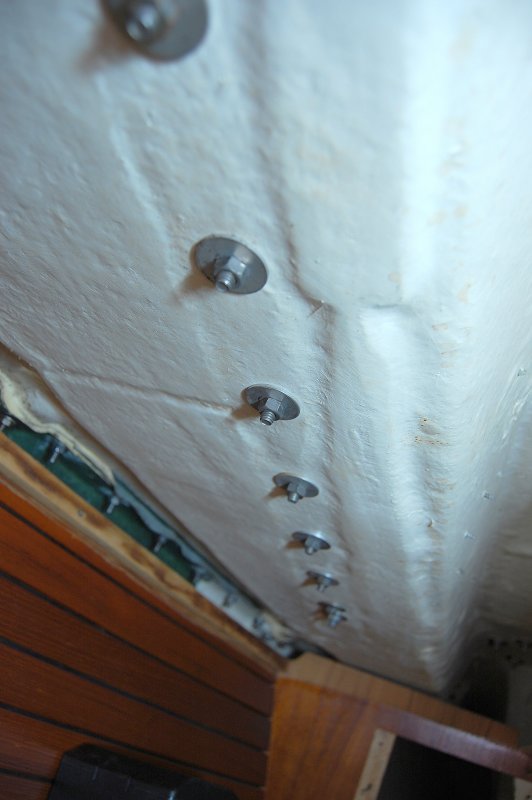
Genoa Track At 31 Years Old
Just one last bit of evidence as to why I prefer butyl tape for deck hardware over Devil's Glue or its extended family of misfit relatives.
EDIT - 2/19/2013: These genoa tracks are still bone dry having not yet been re-bedded since this boat left the factory in 1979!
This is the genoa track on our CS-36T as photographed at year 31. The track is still bedded with the original butyl tape she left the factory with in 1979. The track 31 years later was still BONE DRY, does not leak and has not leaked, ever, in 31 years and 50,000+ nautical miles. We run a 150 genoa most of the year, just as the previous owner did, so this track sees some heavy loads.
I've seen some 4 year old boats bedded with Devils Glue or its relatives dripping wet with rust stained bolts and wet core at year four and sometimes earlier.
Oh and this genoa track was installed without countersinking the holes. Just an aluminum genoa track bedded with butyl tape in 1979. Bevel the holes and it will probably go 70 years without a leak.. (wink)
02-DEC-2005
Removing the Old Hardware
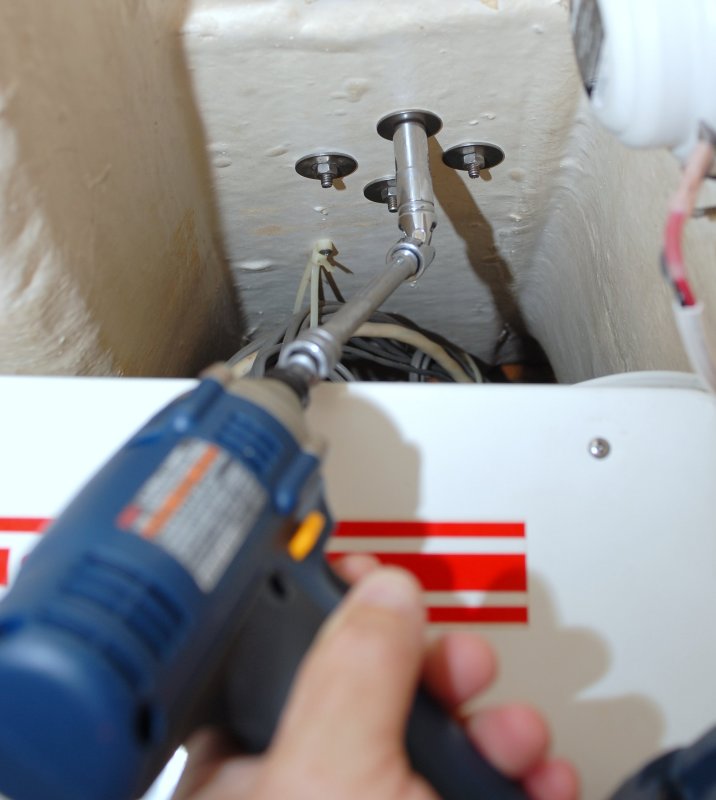
Just a quick tip on removing hardware. A cordless impact driver can make short one person work at removing the nuts on the inside of the boat.
For stanchions and other hardware I often re-install them with hex head bolts rather than Phillips or slot headed screws. This allows me to tape a wrench to the deck using Gorilla Tape to keep it from moving then hit the inside with the impact driver, wrench or socket wrench. If you use the impact driver to re-install pleas DO NOT over do it. These tools are powerful and fast. I would advise against the use of one for re-installing the hardware until you know you are competent with it.
Impact drivers work via hundreds of rapid fire quick impacts or beats per minute sort of like a machine gun. These small, short, very fast beats or impacts will almost always break a nut free from one side without even using a wrench or screw driver on deck.
02-DEC-2005
The Impact Driver
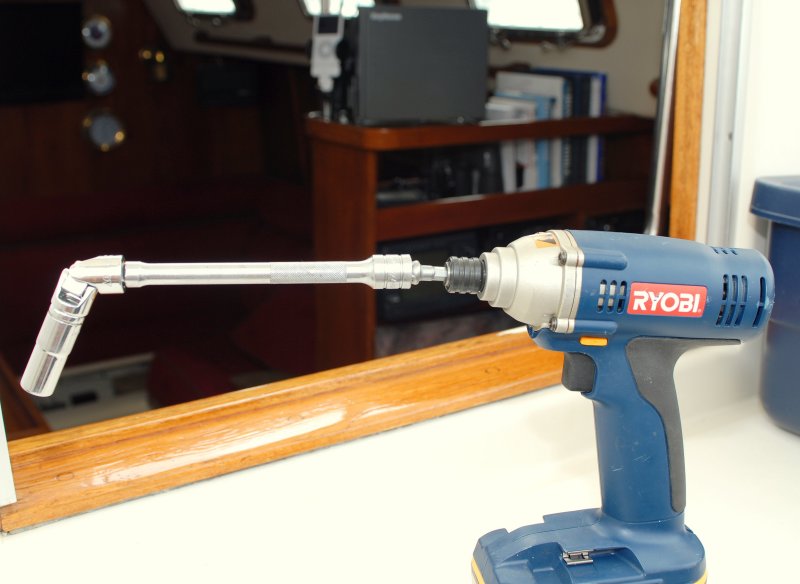
This is one of my impact drivers, it's a cheap Ryobi and does the job. While I much prefer the quality & torque of a Li-ion powered Makita, Bosch, Hitachi or other premium brand I won't lose sleep if I hand this one off to Davey Jones and that kind of power is just not necessary here..
02-DEC-2005
Filling Holes With Screws
One last trick. We've all removed old hardware from a boat only to be left with a hole in the fiberglass. You can try to patch it with gelcoat, and may succeed, or you may make it worse if you're not well versed in gelcoat repair. Here's a quicker way to get back to boating.
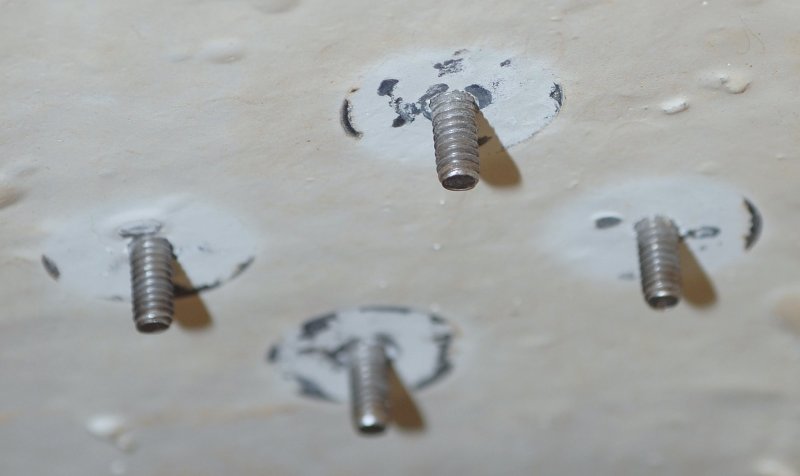
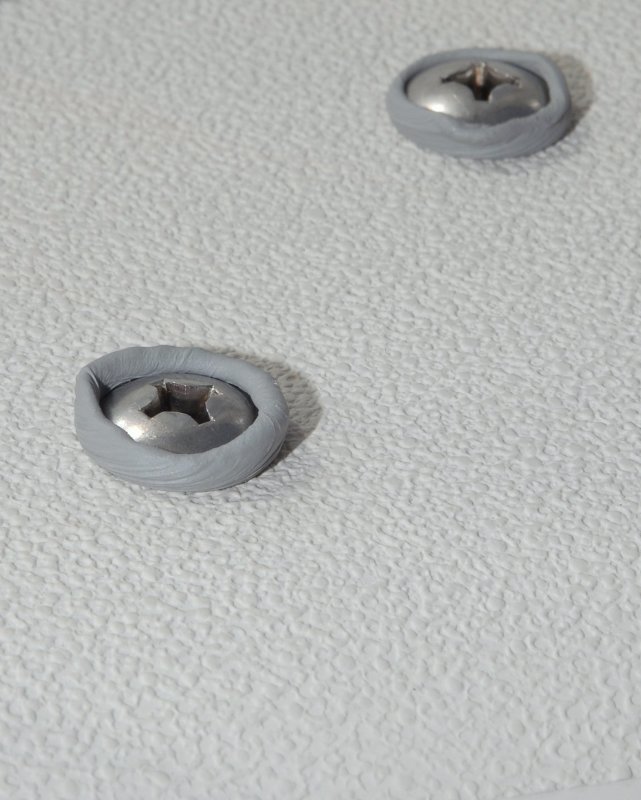
Simply countersink the hole then use a truss head machine screw, or your preferred style, and butyl tape to cover & seal the hole. Truss head machine screws are available from most nut and bolt suppliers like Fastenal. Truss head machine screws have a much wider and lower profile head than a pan head machine screw. The truss head machine screws lend themselves well to plugging old holes with butyl tape..
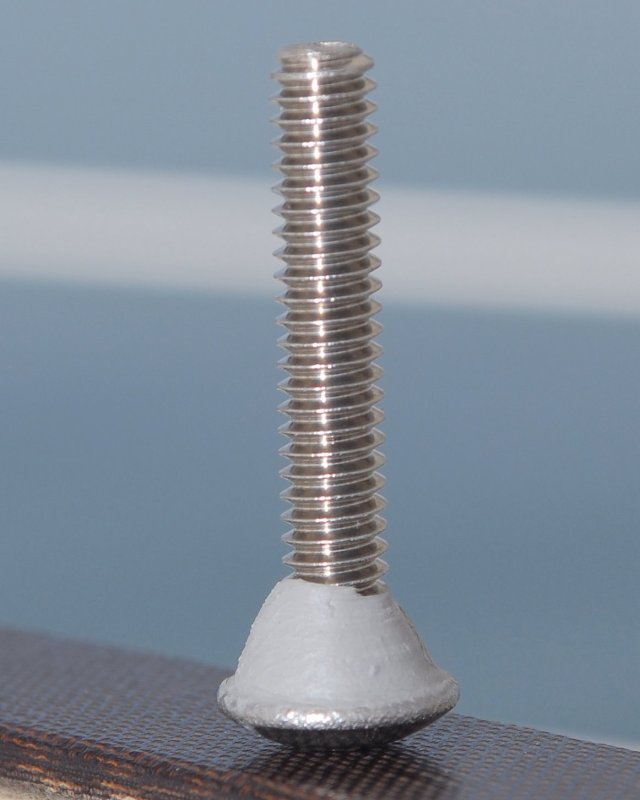
First make a butyl cone around the head.
02-DEC-2005
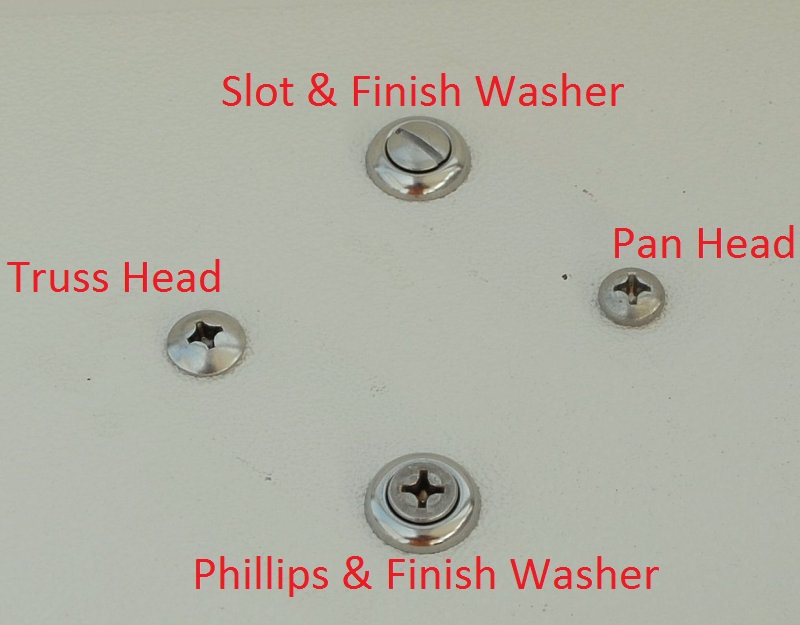
Different Machine Screw Heads
Choose your weapon. I prefer the truss heads as I feel they seal better and will have less potential for leaking. They are also very low profile..
02-DEC-2005
Butyl Cone Wrap
Clean the surface and insert the butyl wrapped machine screw.
02-DEC-2005
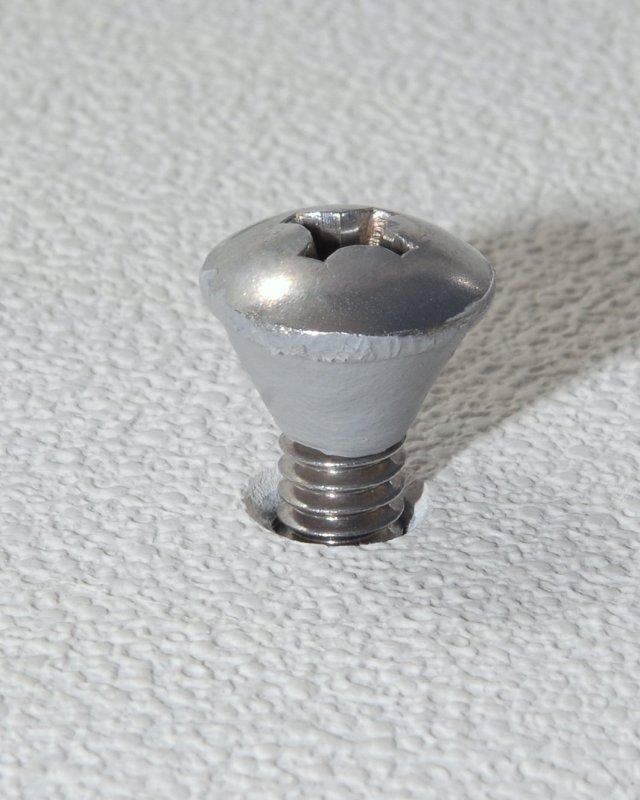
Cone Fits Into Countersunk/Beveled Hole
You can see the cone fitting nicely into the beveled hole.
02-DEC-2005
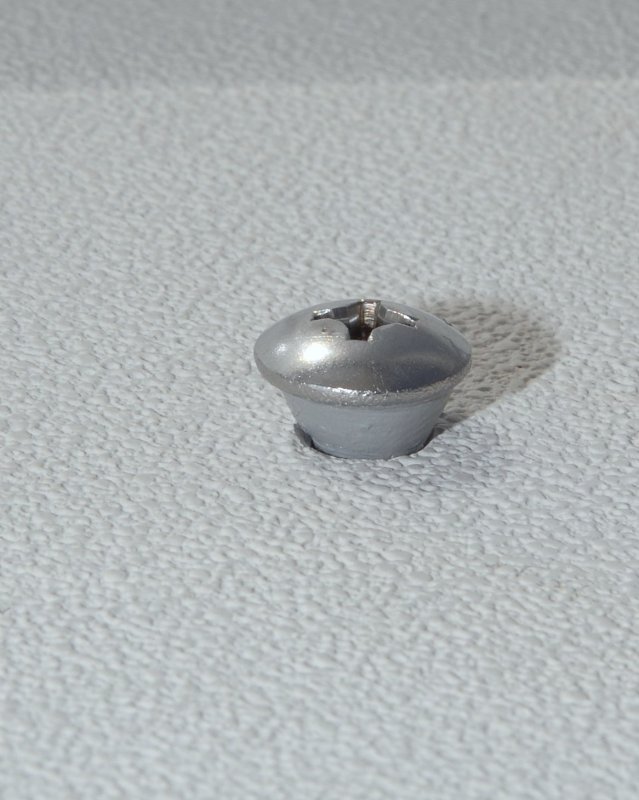
After Tightening
Have one person hold the screw head with a screw driver to keep it from spinning then go below and install the nut and washer and tighten it down..
I will leave you with some general rules for bedding deck hardware:
#1 SEALANT ON DECK - Never bed or use sealant on the inside of the deck. If it leaks you WANT to know about it. By sealing the backing plate side or the inside of the boat you will force the water into the core, if not sealed. You can also cause any trapped water to become starved of oxygen. This can lead to pitting or crevice corrosion of the stainless bolts potentially leading to a catastrophic bolt failure. Only seal the deck side.
#2 TIGHTEN ONCE (tube type caulks) - If you use tube type sealant please don't listen to that old wives tale about letting sealant cure and then tightening it a second time. The second step in that process is waiting for the sealant to change consistency. With butyl, or a marine sealant, done with countersinking, there is no need to wait for a change in consistency. While in "theory" this sounds all warm and fuzzy, and can work if done well, the raw reality is this is often a disaster waiting to happen because it's rarely done well.. With butyl tape you can tighten in until it stops oozing, then you are done. This may take multiple small tightening events for the butyl to displace but there is no worry about it becoming hard...
With butyl countersink the deck hole and tighten it until it stops oozing. Be patient and don't try this in one step. With tube types there are just too many variables that can change the outcome with the "two step" method. It has perhaps been the cause of more deck leaks than if you were to use Swiss cheese to bed your fittings and I strongly suspect Swiss cheese might actually work better, if counter sunk. I have had my moisture meter & sounding hammer on lots of DIY and "professionally" done "tighten twice" boats and there is huge correlation to "tighten twice" and wet decks, huge. Of course butyl eliminates most of these issues...
#3 SILICONE USE - Avoid silicone where you can. There are only two situations where silicone should be used and that is for bedding acrylic dead lights or plastic fittings that are damaged by polysulfides or polyurethanes such as Beckson products. Dow 795 or similar should be used for acrylic ports/dead lights. Silicone contamination of gelcoat is very, very real. It is nearly impossible to clean and remove silicone from gelcoat and auto body products intended for metal are not safe generally for gelcoat. To effectively remove silicone from gelcoat requires judicious manual cleaning then wet sanding rinsing the paper frequently to clear it of silicone traces so you don't grind it deeper into the gelcoat. To test if the silicone is gone spray the area with a misting bottle of water. If the water beads it is not clean.
A customer owned a mid eighties Catalina where the previous owner had used silicone to bed the chain plates. Even after re-bedding they leaked every year for four years straight. He had even resorted to tenacious glues like 3M 5200, still it leaked. He finally called me to discuss it and we simply masked off the surrounding areas with 3M film tape and ground and sanded away the silicone contamination. The chain plates have been dry since, lesson learned the silicone must be COMPLETELY removed before any re-bedding. If you think you've cleaned dry silicone with Acetone, De-Bond or any of the other products folks claim have worked guess again. Over many years I have tried every chemical under the sun to remove silicone contamination and the only thing that works is a thorough manual cleaning and sanding. If you want to nearly ensure that the fitting will leak the next time you re-bed then using silicone is a good way to ensure it..
#4 CLEAN, CLEAN, CLEAN - When bedding hardware clean everything. The deck the hardware the bolts the heads of the bolts etc.. Bolts especially still have cutting oils and residue from machining on them so if you want a good seal clean, clean, clean....
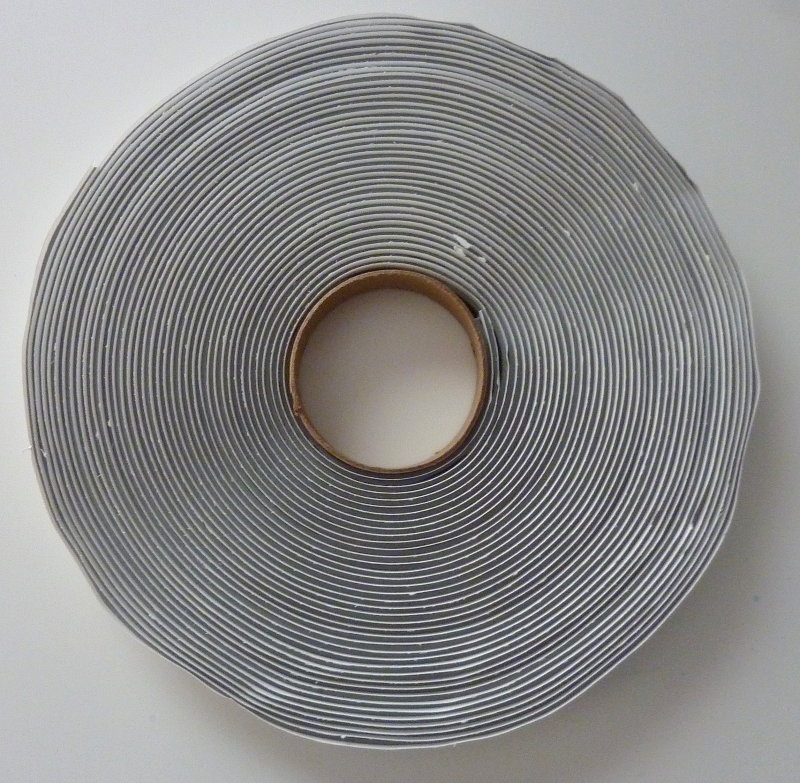
Buy Bed-It Butyl Tape
Once you click the BUY NOW link above you will be taken to our new website to complete your transaction and will not return here.