|
|
|
|
|
|
|
| Phil Douglis | profile | guestbook | all galleries | recent | tree view | thumbnails |

| I call this my pbase “cyberbook” on expressive travel photography and travel photojournalism. Each of these galleries is an educational resource, demonstrating a key aspect of what goes into making pictures express ideas to viewers. When taken together, they will offer you a comprehensive, step-by-step instructional guide to the process of making travel photographs that will say something about your subjects, instead of merely describing them.
I have organized this cyberbook into nearly 100 different galleries. Each one, in effect is a different lesson in photographic expression. I began posting them in 2003. I am often adding new photographs to them. You will find the most recent images at the beginning of each of these galleries. Simply click on any of the thumbnails below to visit the galleries of your choice. (You can find the most recent galleries I've posted by clicking on the "recent" link at the very top of this page.)
What does "expressive travel photography" mean? Most travel photographers start out by making pictures of things to simply describe what they see. I call this the literal travel snapshot. Most travel snapshots are made to preserve private meanings. Many photographers will eventually move on to a second phase – making aesthetically pleasing pictures that enhance what they saw. I call this the “artistic” snapshot - essentially the same as a lovely picture post card or a calendar illustration. This cyberbook does not concern itself with either of these phases. Instead, I demonstrate what goes into a third phase – interpreting the things you see on your travels to express meaning to others. I call these pictures “expressive” images. They are images made for public, rather than private meanings. Expressive photography, like all art, offers universal, and often metaphorical, statements.
I hope that these galleries will also be useful for travel photojournalists. Travel photojournalism differs from travel photography in that the images are ultimately intended to function as public information, education, interpretation and inspiration. Yet regardless of the end use, travel photography and travel photojournalism can share a common language – the language of expression.
What is expressive imagery? It is photography that interprets, rather than describes, what we see to others. It tells a story, going beyond conveying information for its own sake. It becomes metaphorical. One of my most influential teachers, photographer Minor White, taught us that "photographs can be outward expressions of inward states. They are about not just what some thing is, but rather, what else it is." By expressing our own metaphorical point of view about what we see, we can communicate ideas to others, triggering emotional, intellectual, and imaginative responses.
In my view, expressive photography is based upon the three principles I demonstrate in the first three galleries of this cyberbook: Abstraction, Incongruity, and Human Values. Abstraction removes literal, descriptive clutter and hones an image down to its essence and encourages unlimited thinking. Incongruity presents elements that seem to be at odds with their context and creates contrasts and juxtapositions that stimulate both the emotions and the imagination. Human values convey the emotions, beliefs, traditions and knowledge that we understand and share as humans. I suggest that anyone using this cyberbook as a learning tool, study these three galleries before going on to the rest of them.
I believe that human values hold the key to expressive photography. They stand at the base of a triangle of principles upon which I build my images. Abstraction runs up one side of this triangle, incongruity the other, and human values supports both of them. Without this triangle, expression does not occur, and without human values, the triangle does not stand, because abstraction and incongruity will have no anchor.
Once we know the humane point we are trying to express to our viewers, we can then consider how to abstract the image to reveal its essence, as well as how to bring either perceptual incongruity or subject incongruity into play. And then we can go on to fine tune our image with color, mood, atmosphere, composition, and best make our decisions in controlling light, perspective, and moments in time. These options are not Phil’s “rules or laws of expressive photography.” This is simply how I choose to understand and use the language of photographic expression, a language that, above all, must be a human, rather a technical, language.
As you browse these galleries, you will notice that I frequently break the so-called “rules” or conventions of photography. Following those "rules" as a formula for "successful" composition, exposure, focus, etc. is destructively constricting. Doing it just because others expect us to do it is an abdication of thought and responsibility. When my students ask me how to make an image “better” I always ask them what they are trying to express? In expressive photography, form should follow function.
It's important to also note that there can be no such thing as a single “meaning” for any expressive photograph. Each image can have a number of meanings, depending upon who is looking at it. Although it is possible to sometimes agree on the general meaning of some pictures because of commonly shared context or thought patterns, it is important to keep in mind that truly expressive images usually trigger thoughts that stimulate the mind, emotion, and imagination of the viewer. Each person must come to his or her own understanding of what a picture says or does not say. In the end, all meaning is really what we call “subjective.” Expressive photography is an art form, and all art exists truly in the eye of the beholder.
To demonstrate these ideas, I share with you here nearly 5,000 expressive images that I have made over the years.( Most of these images have been selected from my own travel archive -- which are organized there according to the trips I have taken over the years -- at http://www.pnd1.smugmug.com/ )
It is important to keep in mind that the images I present in this cyberbook should be viewed as teaching examples -- each of them working in partnership with the words I have written to accompany them. The examples should not be looked at as "stand-alone" images, or their learning context will be diminished. Do not expect to find a lot of information about cameras here. People who obsess about cameras are often likely to focus on the technical side of photography at the expense of expression. The camera does not make the picture. The photographer makes the picture. I regard cameras and lenses as tools, and over the years have used those that will help me express my ideas and make it easy for me to travel. I shoot only jpeg files – never shooting RAW -- because I use my images primarily to teach with here on the web. I rarely, if ever, print them. Since I have no control over the colors and brightness rendered on the monitors of people all over the world, jpeg color and contrast values offer more than enough image quality to make my teaching points.
Captions appear under every image in this cyberbook. In them, I provide necessary context and explain my reason for taking the photo and usually indicate what I am trying to express by making it the way I did. Some may wonder if I already know what story I want to tell when I click the shutter, or if I only discover that story after making the image? I don't analyze a scene first to see if I see a story there. If I see something that is perhaps worthy of a photograph, I go ahead and make the image, and then think about what it might say to others. And I never make just one shot if I can help it. I will keep shooting the idea from various positions and in various moments in light, time and space, and the more I experiment, the more clearly an idea will take shape in my mind. Ultimately, a picture must communicate something if it is to have value to me and to others. Rarely does such an idea appear as I approach a subject for the first time. In the process of working on it, the point of a picture often becomes more clear, and later, when I am editing my pictures, I may also see things I never saw before, and perhaps a new story emerges as well.
For nearly fifty years, I have been teaching photographic communication in my workshops and tutorials, and this cyberbook is intended to be an extension of that teaching. I offer these ideas here as a complimentary educational resource for passionate photographers around the world. Since August, 2003, these pages have been viewed more than twelve million times. I also look forward to personally extending and deepening this knowledge by welcoming those on-line viewers who are willing and able to participate in my comprehensive and intensive tutorials offered in Arizona.
This cyberbook goes far beyond a display of my own travel photography. I intend it as an interactive learning device, in essence an educational blog about visual literacy. It is probably the largest and most comprehensive instructional resource on visual literacy freely available on the internet. I am offering these ideas to pbase members and guests in the hopes that they will help me teach by leaving comments under these pictures, asking questions, and telling us how and why they feel these pictures work as expression. Since launching this cyberbook in 2003, I have responded to all comments left by viewers in these galleries, and I invite you to add your own views to this invaluable body of opinion and ideas.
I offer these galleries as a complimentary instructional resource. I post them here on pbase.com solely for educational purposes. I am grateful to the hundreds of people who I've photographed in these images. Knowingly or unknowingly, by appearing in my photos, all of these people are indirectly helping others to learn and grow as photographic artists. I thank them all for their help. If there may be any among them who object to appearing here, I will respect their wishes and remove such images from my galleries.
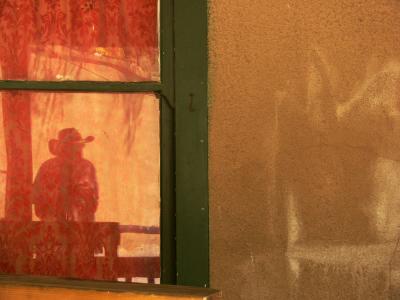
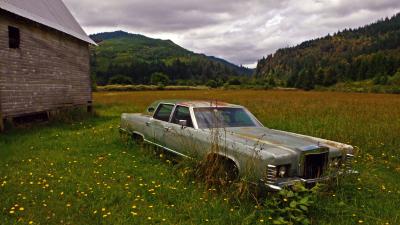
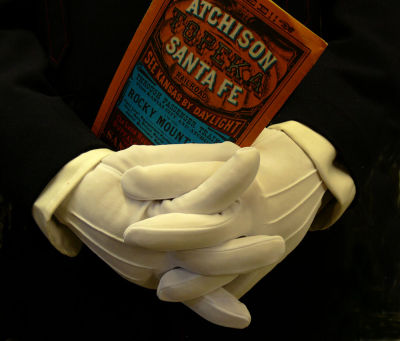
Each gallery is presented in "blog" style. A large thumbnail is displayed for each image, along with a detailed caption explaining how I intended to express my ideas. If you click on the large thumbnail, you can see it in its full size. I invite your comments and questions and I will respond to all of them. I hope you will be able to participate in the dialogue.
Welcome, enjoy, and learn. I ask not for your “votes,” but rather for your comments, your ideas, and your questions.
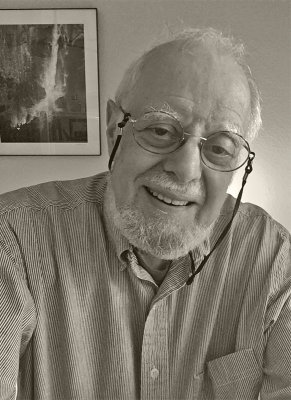
Phil Douglis, Director, The Douglis Visual Workshops, Phoenix, Arizona, USA. Contact: pnd1@cox.net
In 2021, Tim and I produced a series of YouTube videos based on the ideas in this cyberbook: https://www.youtube.com/channel/UC6qIGJ0WFVbxSsSxgqaVlWw
click on thumbnails for full image
|