04-OCT-2018
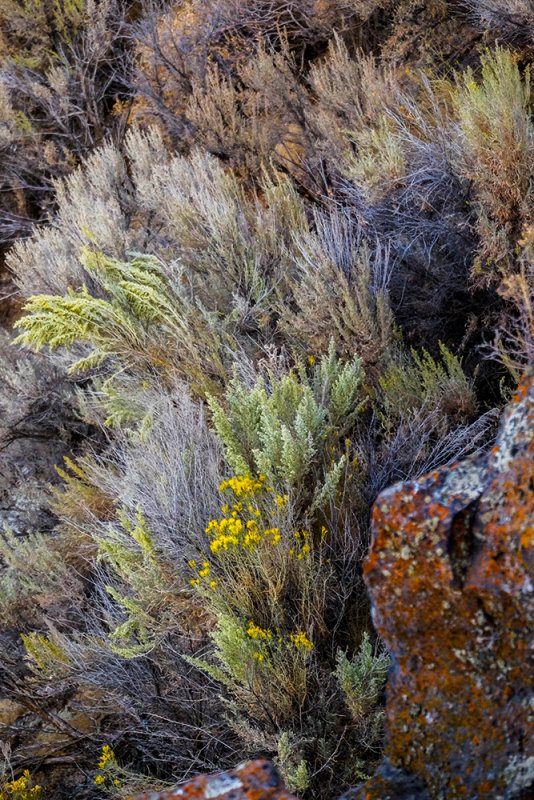
Wildflowers, Snake River Canyon, Twin Falls, Idaho, 2018
This image, made just after sunset, takes advantage of the flat but warm light of dusk. Without distracting shadows, the image becomes a study in textured detail, warmed by traces of the three prime colors, red, yellow, and blue. The curving plant just to the left of center invites our touch, as it invites our touch.
03-NOV-2014
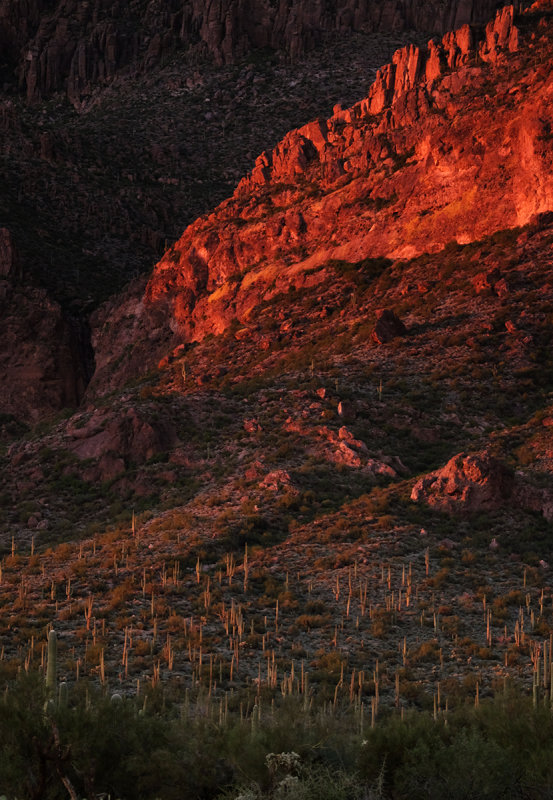
Desert contrasts, Peralta Canyon, Arizona, 2014
In this vertical landscape, I contrast a vast field of saguaro cactus with the sharply defined crest of a rocky outcropping soaring above them at sunset. The saguaros are defined by the day’s last light, as it illuminates them from the lowest possible angle. The saguaros create a field of prickly texture that fills the lower third of the frame. Golden red rocks provide a transitional texture in the middle third of the frame. The diagonal thrust of the comb-like outcropping at the top of the frame reveals deeply carved texture, repeating the verticality of the saguaro as well as duplicating the colors of the rough boulders that litter the middle ground. The illuminated fortress-like wall of stone also provides an incongruous contrast in scale to the tiny saguaro arrayed below it.
10-FEB-2013
Route 41 Books, near Masaryktown, Florida, 2013
The shield, here evoking the shape of a highway sign, can symbolize great strength and protection. Yet the weathered shield painted on the side of a small bookstore alongside US Highway 41 in rural northern Florida, expresses the idea that nothing is immune from the wear and tear of weather, sun, and time itself. I move my lens to within inches of the painted advertisement, cropping into the top of the shield as I do so. This close-up emphasizes the texture created by the peeling paint, defining the gradual effect of nature upon the works of man.
14-AUG-2012
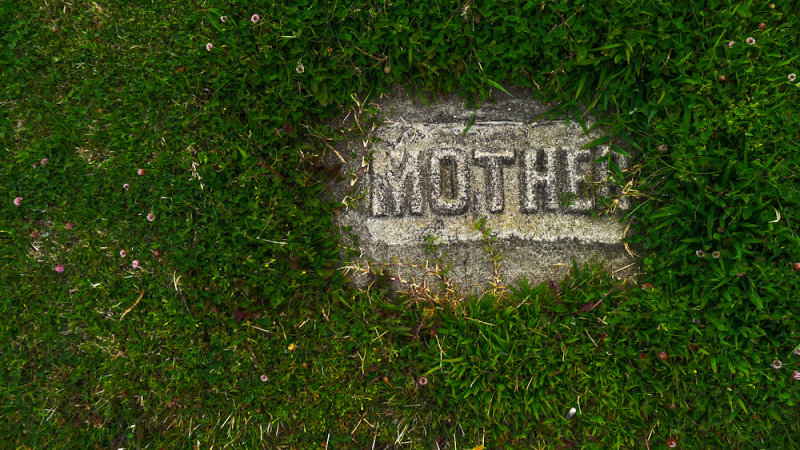
Remembering mother, Cayucos, California, 2012
I contrast two strikingly different textures in this image – a sea of tightly packed grass against the weathered face of a semi-obscured granite headstone. The textures play against each other in color as well – the deep green grass encroaches on the mossy black and white grain of the old granite. The image expresses the nature of remembrance itself. It fades with the years. The stone speaks only of “Mother,” and is matched by another stone that simply reads “Father.” The grass has turned what once was a rectangular shape of stone into a circle, obscuring the final letter in the process. As the circle grows ever smaller, the memory of mother dims with time.
23-APR-2011
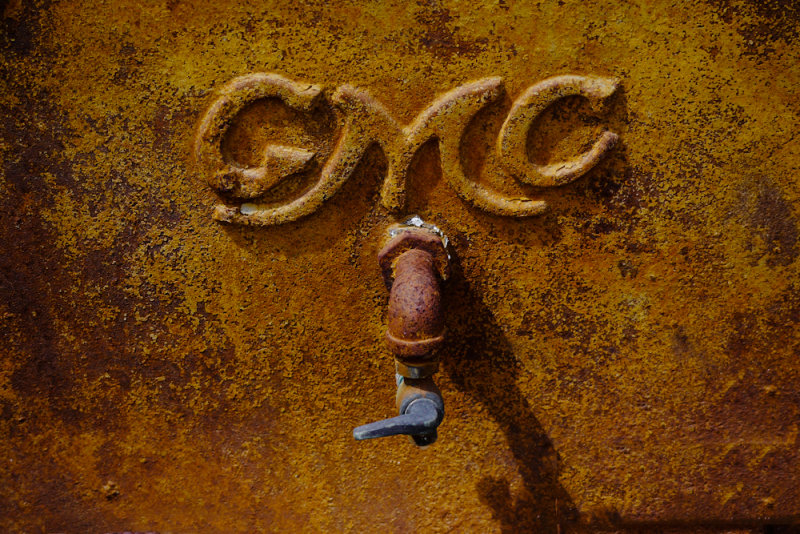
Rust, Cordes Junction, Arizona, 2011
I usually prefer to photograph textures in either the early morning or late afternoon, when the low angle of the sun throws height variations into sharp relief. However, I made this image after the “good” light vanished, and the sun was already high in the sky. The high angle of the sun makes the old GMC logo on a rusting truck radiator stand out, as well as creating a sundial out of the shadow of the drainage valve below.
23-DEC-2010
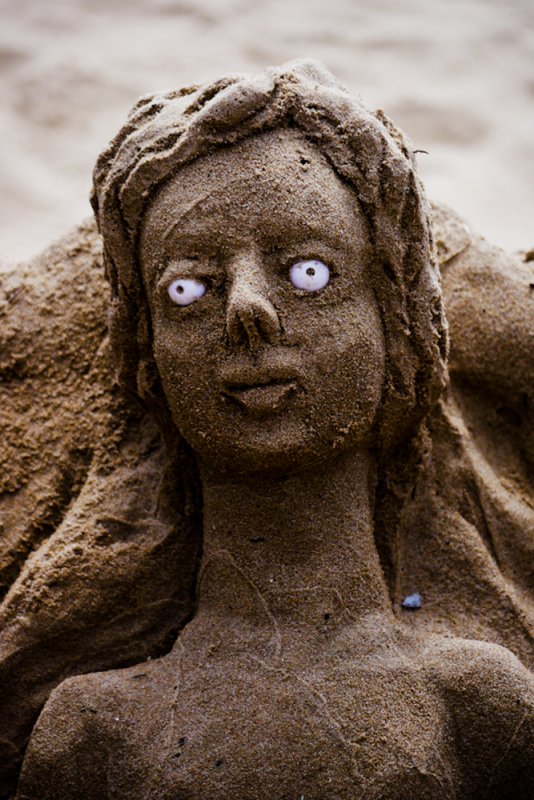
Sand sculpture, Recife, Brazil, 2010
I zoomed in to make a close up shot of the head and shoulders of this sand figure featured in a nativity scene on one of Recife’s public beaches, emphasizing the tactile nature of its texture. The only parts of the sculpture that are not made of sand are the innocently primitive and incongruous eyes, which are made of glass or plastic. The sculpture expresses its idea through not only form but through surface texture. Even though the light itself may be flat here, the power of that texture beckons the hand of the viewer.
03-JUN-2010
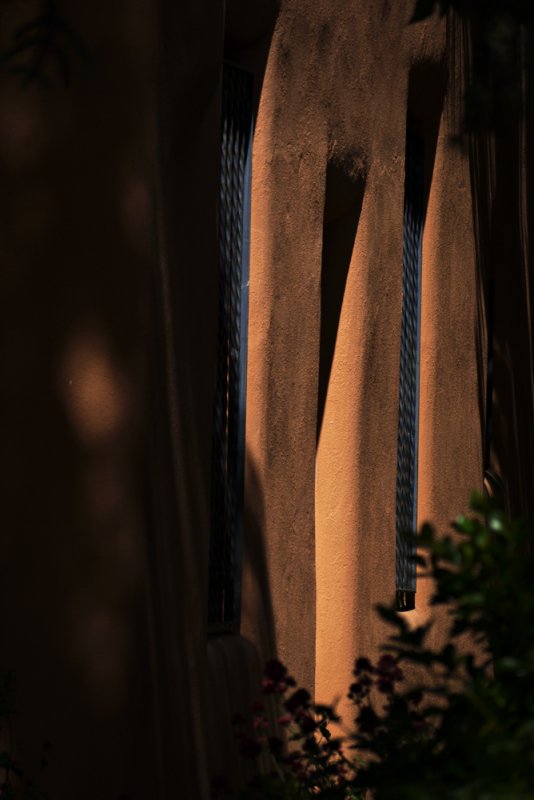
Santa Fe style, Santa Fe, New Mexico, 2010
Early morning light shapes the contours and textured surfaces of Santa Fe’s distinctive architecture. I exposed on the brilliantly illuminated adobe walls with my spot meter, allowing the surrounding shadowed areas to recede into darkness.
07-JUN-2010
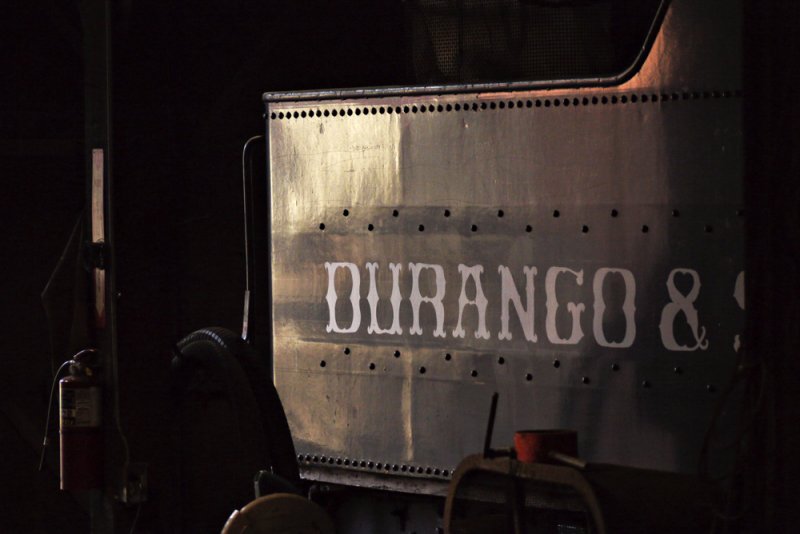
Locomotive tender, Durango, Colorado, 2010
Photographing through an open window of a railroad locomotive barn, I caught the textures of the surface of this antique tender in the evening light. Its metal plates come at us out of the shadows, looking every bit as old as they are.
13-NOV-2009
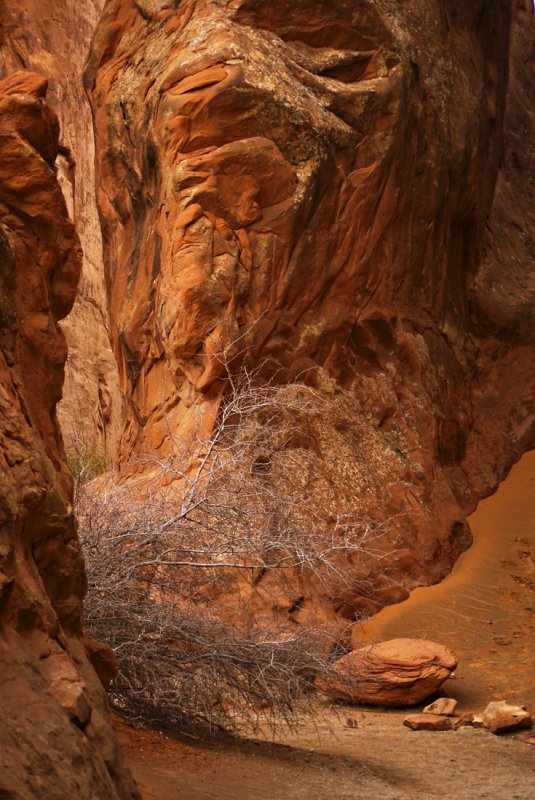
The Devil’s Garden, Arches National Park, Utah, 2009
I made this image within a small canyon at the intersection of two passageways. A dead tree sits at the spot where these passageways meet. Soaring over the tree is a spectacularly textured triangular rock wall, which I use to fill much of the frame. It was a cloudy day, which created a soft light that seemed to give the textured rock before us even more dimensionality and presence, as well as richly saturated color. The longer I studied this texture, the more I saw. There is an astounding head and shoulder profile of a bearded man emerging from the rock in the middle of the upper half of the image. Even the texture of the boulder in the lower right hand corner of the frame has a role to play here – it gives the large rock context in scale, and draws the eye towards the passageway that extends to the right just behind it.
15-OCT-2009
Roman sarcophagus, Istanbul, Turkey, 2009
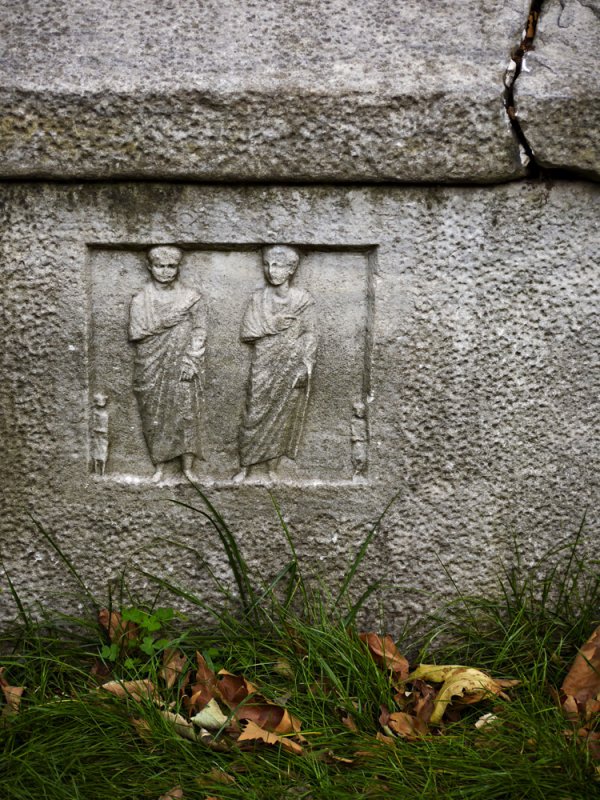
The Romans named Istanbul Byzantium in 64AD, and this tomb dates back to the Byzantine era. It stands just outside Istanbul’s massive archeological museum, seemingly forgotten, its marble surface pitted by the elements. This texture creates a palpable reference to the passage of time – more than 2,000 years of it. The figures in togas stare out at us as time ravages their home – a huge crack in the top reminds us that Rome, as well as the many Byzantine and Ottoman regimes that followed, eventually vanished. Even the dead leaves that litter foreground echo the relentless cycling of time.
03-OCT-2009
Contrast, Downtown Vancouver, Canada, 2009
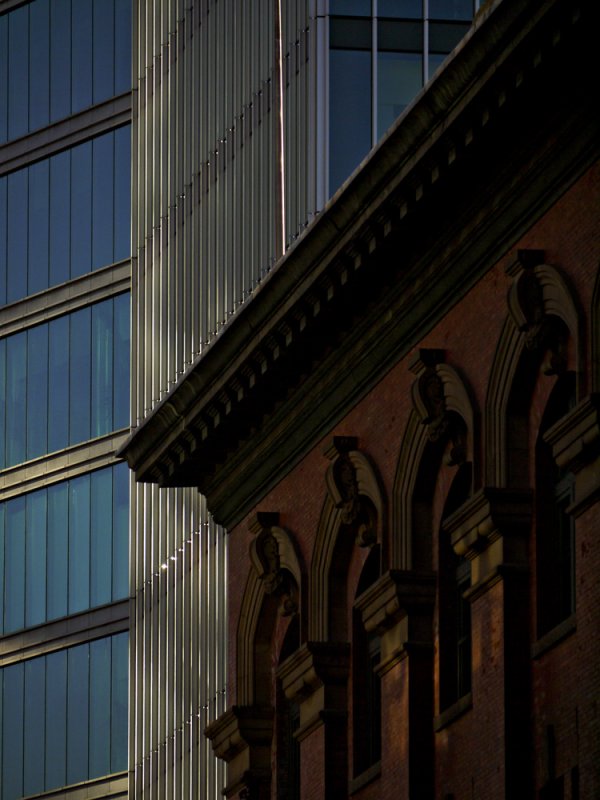
I contrast the textures here of a gleaming contemporary aluminum clad skyscraper and a deeply shadowed 19th century Vancouver office building. Two primary colors are at work – the blue tinted windows of the contemporary building and the red stone facing on the vintage structure. The early morning light brushes the windows of the old building, adding still another texture to the mix. I exposed for the new building, allowing the older building to gradually fade into the shadows of time.
22-JUL-2009
The Choate Bridge, Ipswich, Massachusetts, 2009
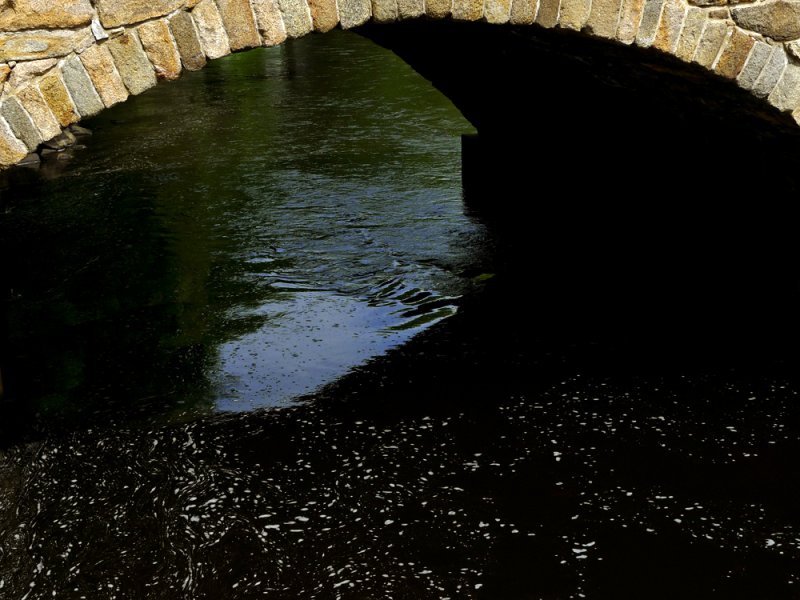
The Choate Bridge has spanned the Ipswich River since 1764. It said to be the oldest stone arched bridge in the United States. In this image, I exclude most of the bridge, keeping only the edge of one of its two arches in my frame. This forces the eye down into the waters that surge below the bridge. The play of light and shadow on this water reveals four distinct textures: a stippled foreground, a seemingly calmer patch directly below the bridge, a curving segment of water that appears to be folding in upon itself, and the massively tranquil area of greenish water in the background. Textures will change in appearance as the effect of light itself changes.