13-FEB-2015
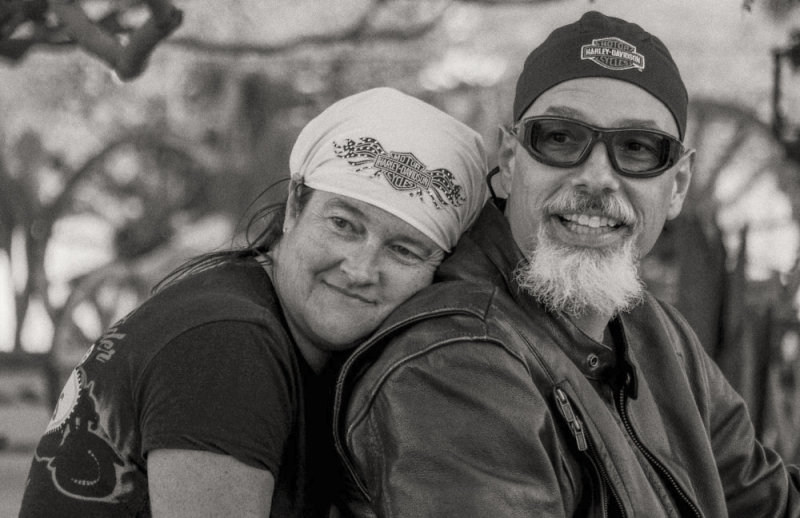
Bikers, Cave Creek, Arizona, 2015
This pair of bikers motored all the way from Ohio to reach this Cave Creek, Arizona parking lot. They told us they were traveling nurses, and wear contrasting scarves on their heads that tell us what kind of motorcycle they are driving, They express contrasting emotional responses as well. I converted the image from color to black and white to remove distracting colors from the background and simplify the image.
07-FEB-2013
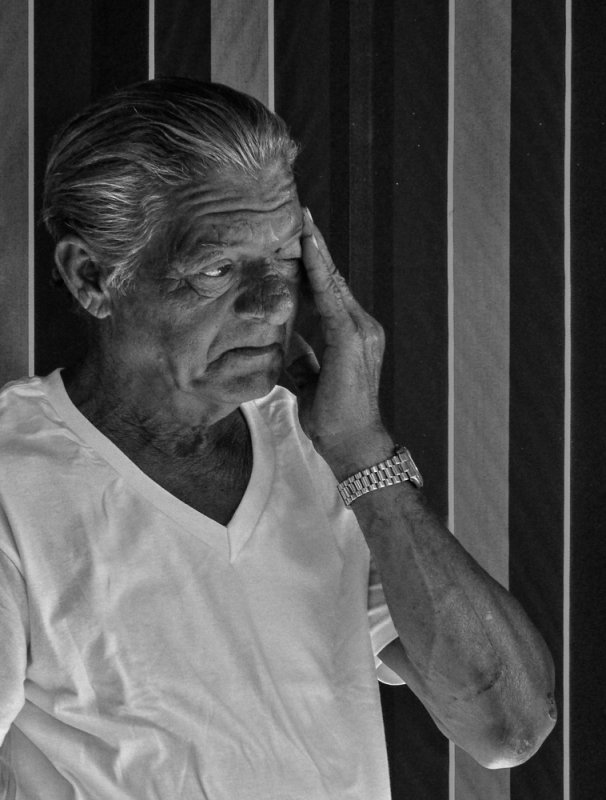
Spectator, Domino Park, Little Havana, Miami, Florida, 2013
As this man paused to wearily massage his face, I made a portrait of him that speaks of a long and perhaps difficult life. He was watching a domino game at a park in the middle of Little Havana, a community of Cuban exiles, as well as immigrants from several Central American countries. I know nothing of this man’s own story. I leave that to the imagination of the viewer. I made this portrait of him from a distance at a 200mm telephoto focal length. I was drawn to the wonderful play of reflected sunlight that illuminated his face and his meticulously combed hair. He stands before a vividly colored canvas awning that brings shade to the players. The red, green and yellow stripes on this awning were so visually striking that they competed with the contemplative nature of the portrait. By converting the image to black and white, I was able to place my emphasis on the man, rather than on the setting. One eye is open, the other shut. The furrows in his forehead conform to the pressure of his fingers upon his face. He has no doubt seen much of life, and has come to watch the competition and socialize with his friends. Yet at this moment, he seems far away from it all.
18-NOV-2011
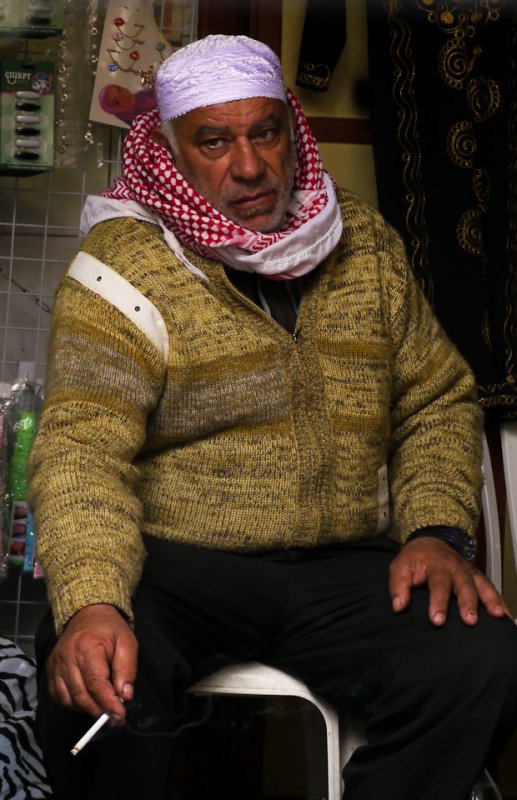
Shopkeeper, Jerusalem, Israel, 2011
This portrait of a Muslin shopkeeper, which I made while walking through souks of the Jerusalem’s old city, speaks to me of mixed emotions. He seems neither pleased nor displeased by my attentions. He stares impassively at us, holding a lighted cigarette in one hand, while bracing his other hand on his knee. He bends his head slightly to his right, projecting a sense of patience. He wears the Arab keffiyeh, a traditional headscarf designed as protection from sun and sand. The red and white color of his headscarf is not symbolic – Arabs from many countries and backgrounds wear such scarves. He also wears a taqiyah, a white prayer cap giving him his identity as a Muslim. This mark of faith is the brightest spot in the image. The Jerusalem souks are chilly in November, and a warm, well-made sweater completes his ensemble. He sits on a white plastic chair, surrounded by his wares. I only show a trace of them – I emphasize the man himself here.
12-NOV-2011
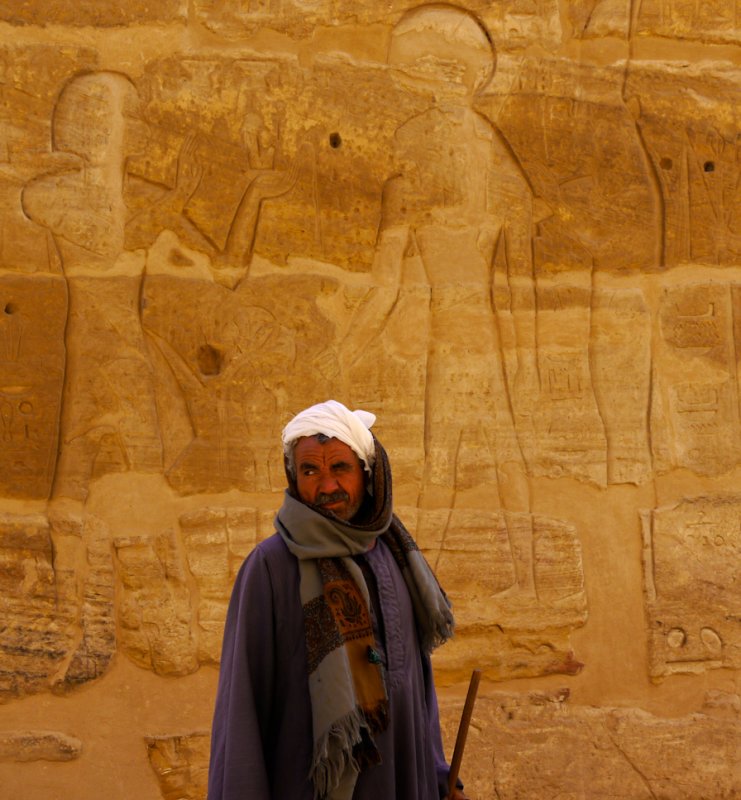
Bedouin tribesman, Habu Temple, Luxor, Egypt, 2011
I found this man standing before a carved wall of Luxor’s Habu Temple, which is also known as the Mortuary Temple of Ramesses III. Its inscribed reliefs depict the triumphs of his reign as Egypt’s Pharaoh from 1186 to 1155 BC. The carving in this image probably tells a small part of that story, while the Bedouin tribesman standing in front of it speaks to us of both past and present. The Bedouins are a desert dwelling Arab ethnic group, divided into many clans or tribes. Large numbers of Bedouins throughout the Middle East have left the traditional nomadic life to become settled citizens of various nations, rather than stateless nomadic herders. I do not know which tribe this man in this environmental portrait belongs to. He wears a white turban, a purple cloak, and carries a staff. He seems to come from another time, just as the carving behind him. Yet he is also most likely an Egyptian, and as such, the temple he stands in here can be seen as part of his own heritage.
03-SEP-2011
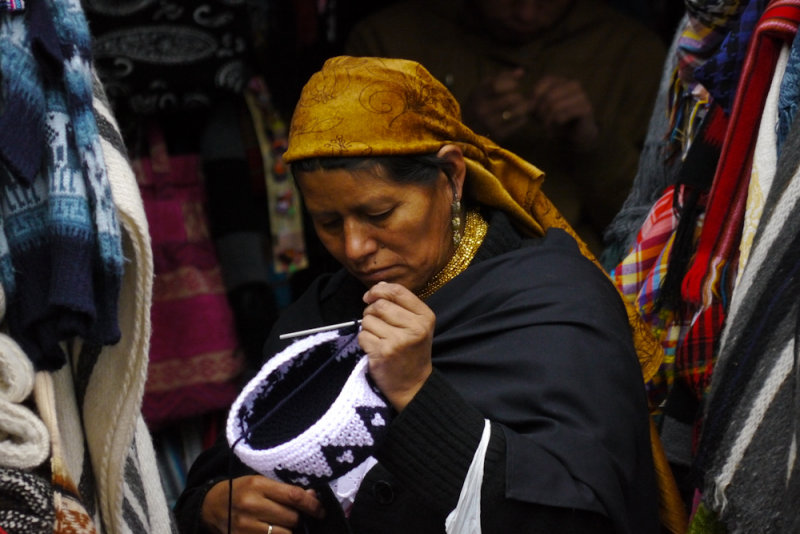
The woman in the golden scarf, Cuenca, Ecuador, 2011
I photographed this woman over several days as she worked in her clothing stall at the city’s San Francisco market. I liked this portrait because it captures the care – and love – she brings to her work. Much of what she sells is hand made, and she brings years of knowledge to her craft. I frame her in the colors of her wares, but it is the rich color of her gold scarf and the golden chains on her neck that best define the tradition in which she works.
03-SEP-2011
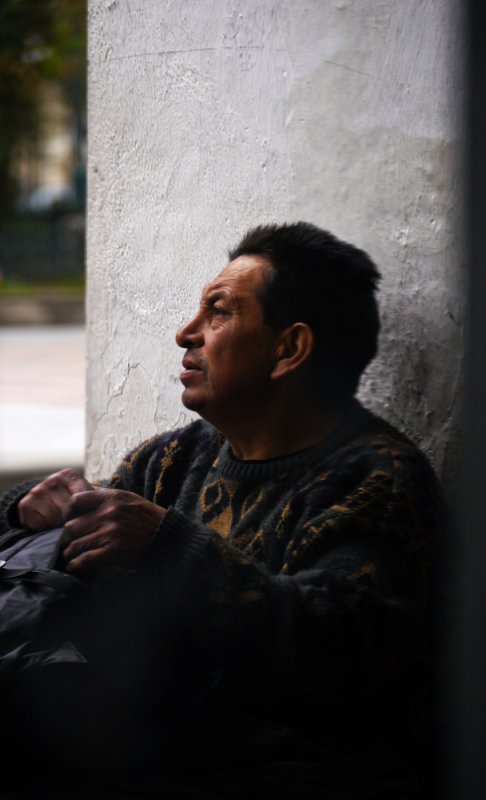
Shoeshine man, Cuenca, Ecuador, 2011
This man face expresses significant character – he seems to have lived a hard life. His hands, blackened with shoe polish, speak of his occupation. I did not need to show him shining someone’s shoes. He looks away, as if he is wishing he could be somewhere else at this moment. Yet his resting hands are poised upon his equipment bag, ready to resume work at a moment’s notice.
07-SEP-2011
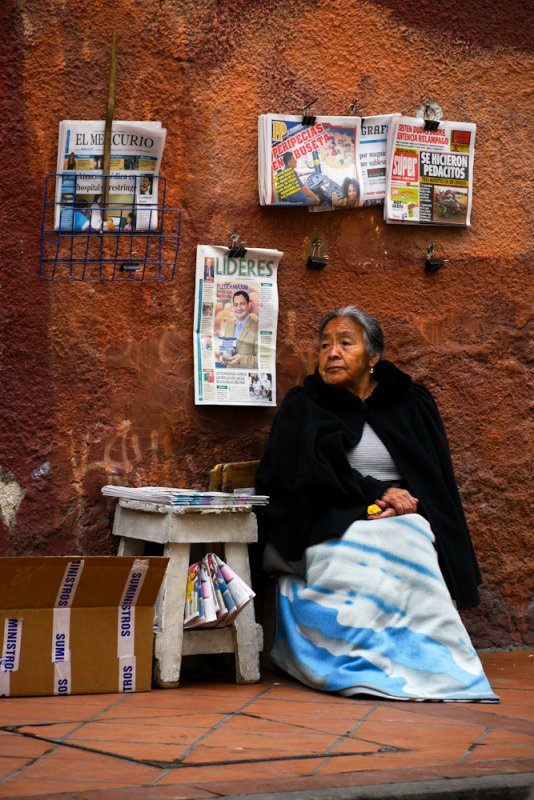
Newspaper vendor, Cuenca, Ecuador, 2011
The wonderful color of the wall and its journalistic display offers a perfect context for my intentions here. It helps amplify the fact that she works in a traditional culture, yet incongruously helps distribute the most up to the minute news. It is an incongruous portrait in many ways – for example, the tabloids that hang on the wall behind her speak of things that we can hardly imagine her even grasping. Yet the image also expresses a bit of her character. She seems experienced and respected, yet must have lived a life that has not always been an easy one. I sense both resignation and patience in her expression and body language.
24-SEP-2011
At rest, Cuenca, Ecuador, 2011
This woman was sweeping the entrance to the shop in which she works. She stopped for a moment to lean on her broom and reflect on some aspect of her life. In looking at her expression, I think she is about as far away as she can get from her broom without putting it down. It is a portrait that does what an expressive portrait should do – not just show what a person looks like, but also rather define something about whom they are.
27-JUL-2011
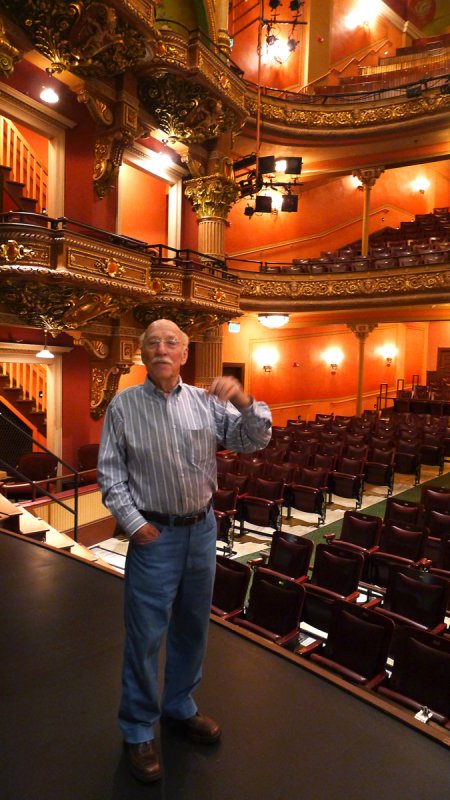
Bob Boland, fund-raiser, The Colonial Theatre, Pittsfield, Massachusetts, 2011
While visiting the Berkshire Mountain town of Pittsfield, we were able to tour the historic Colonial Theatre. Founded in 1903, it’s ornate hall featured performances by such luminaries as Will Rogers, Al Jolson, Lillian Russell, the Lunts and the Barrymores, until it fell on hard times with the advent of television in the early 1950s and shut down. A construction supply company used its vast spaces while volunteer residents of Pittsfield tried to raise the funds to buy it and restore it to its former glory. It proved to be a half-century long struggle, led by this man, 86-year-old Bob Boland. Today the theatre is back in business, one of the primary venues of the Berkshire Theatre Festival. It offers performances year round. Bob Boland led our tour of the theatre, taking us to all of its nooks and crannies. While we were on stage, I photographed him as he talked to us about his efforts to restore the towering theater that stands illuminated behind him. His body language and expression speaks to the pride of an entire community. He is still raising funds to maintain it, and actively manages its vast theatrical archives.
23-APR-2011
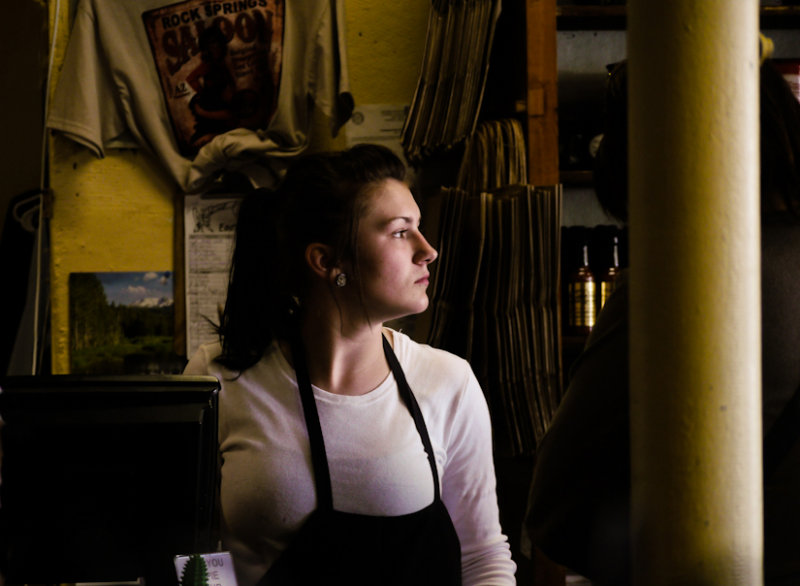
Cashier, Rock City Café, Rock City, Arizona, 2011
I made this portrait as this cashier turned away from her computer for a moment to catch the window light. Her illuminated profile repeats the glowing light on the pillar at right. The image tells us she is on the job, yet her mind is definitely elsewhere at this moment.
23-APR-2011
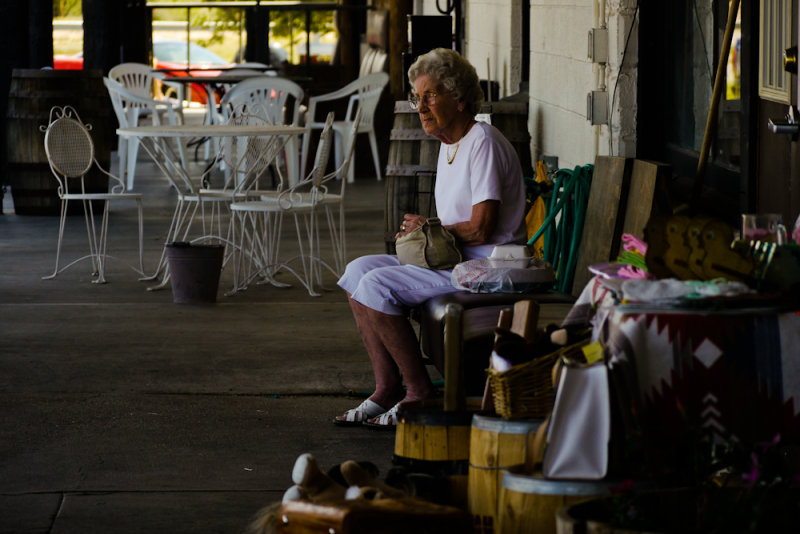
Patron, Rock City Café, Rock City, Arizona, 2011
A woman waits for someone outside this Arizona roadhouse, famous for its pies. She does not relax – she sits forward in her chair, attentive to what is going on around her. I sense a bit of tension and impatience in the body language and expression. She seems to be asking the question “When are they going to come and get me?”
07-JUN-2010
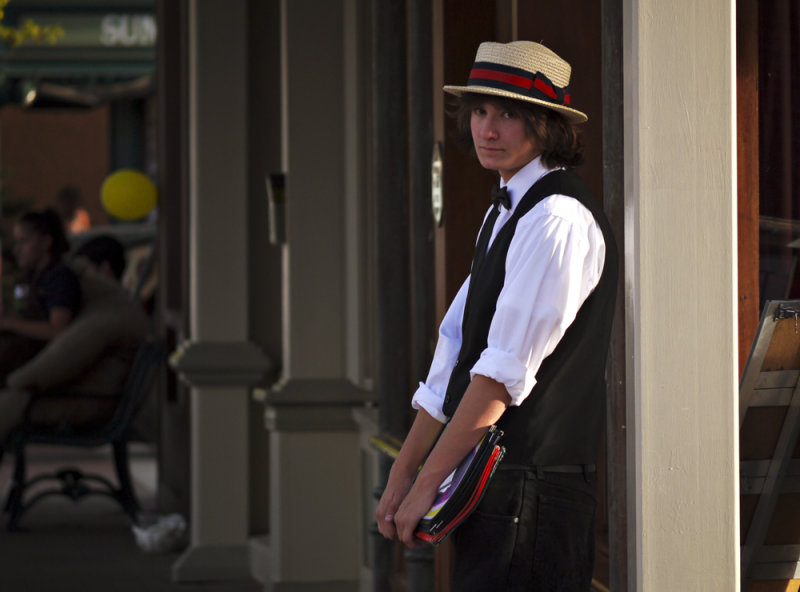
Restaurant barker, Durango, Colorado, 2010
A stack of menus in hand, a restaurant barker pauses for a moment to look my camera in the eye. I come away with a portrait that reflects the tedium of repetitive work. The barker must convince tourists strolling Durango’s sidewalks to eat here, but at this moment in time there seems to be nobody to convince. We are left with an insight into the frustrating nature of salesmanship.