17-APR-2015
Webster's Dictionary, 1934 edition, Phoenix, Arizona, 2015
This 81 year-old, 3,000 page dictionary is so heavy that it requires its own stand. It originally belonged to my wife's family, and was an essential reference resource until the computer rendered it archaic more than twenty five years ago. It still graces our living room, a fascinating, if bulky, nostalgic relic of another time. It even offers alphabetical tabs, cut into the side of its pages, allowing us to physically navigate its labyrinth of detail. I made this image to celebrate such detail by focusing my lens as close as I could on the edge of a single page. I tilted the frame, creating an energetic diagonal running from corner to corner. In doing so, I create a composition of opposing triangles. The lower triangle is filled with a chunk of the dictionary's gilded page edges. Five alphabetical tabs appear at the bottom of five semi-circular channels carved into those page edges, The upper triangle embraces the wide white margin of but one page, as well a fragmented portion of ten or so of its dictionary entries. In making this image, I abstract this massive volume down to an essence -- revealing details that merely hint at its vast scale. In the process of abstraction, I show less, and end up by saying more.
08-FEB-2013
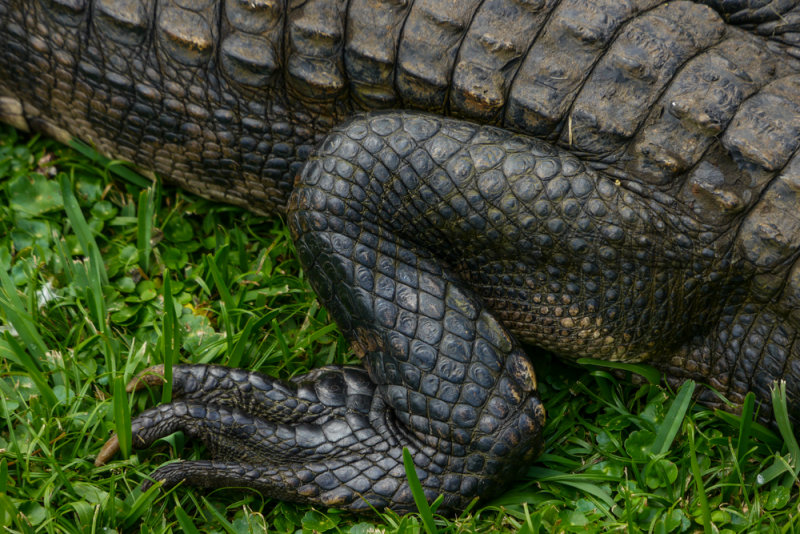
Reptile at rest, Everglades National Park, Florida, 2013
This large alligator had come to rest upon the grass at the edge of an Everglades swamp. I moved in on it (very quietly and carefully) until I was only a few feet way. I zoomed in on one leg, keeping only a bit of the armored belly and back for context. The resulting image stresses the detail that takes this creature back into prehistoric times. Through such detail, I am able to emphasize the subtle changes of skin pattern, the terrifying length of the toes and claws, and the tension building within the bent leg, We don’t really need to see the “rest of the alligator.” Our imaginations will do the rest.
14-FEB-2013
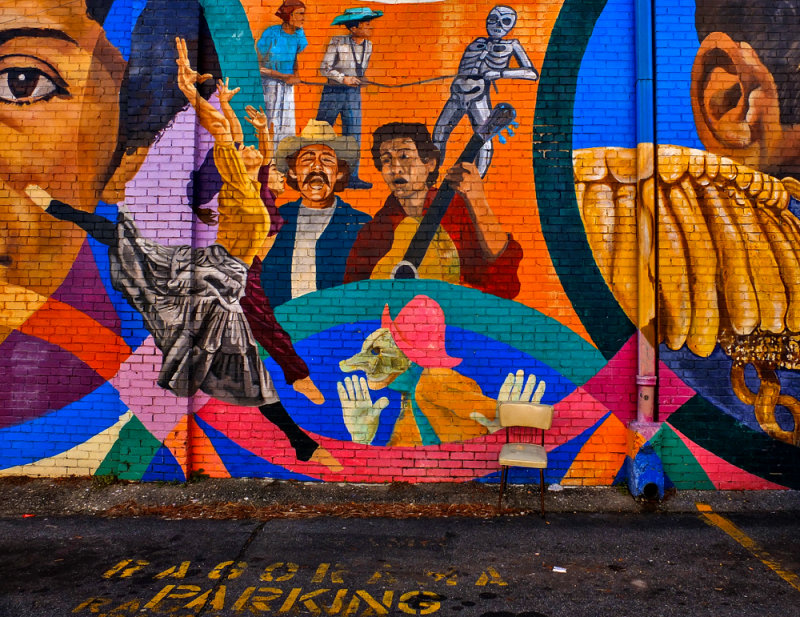
Theatrical Mural, Little Five Points, Atlanta, Georgia, 2013
Just as this wall has been built brick by brick, so too has this colorful wall mural been created, detail-by-detail. Built adjacent to a small restaurant parking area in this crowded Atlanta neighborhood, the wall contains a multiplicity of performing figures, varying in costume, color, and scale. The mural most likely pays tribute to the performers of a local theatrical organization. For me, however, the most important detail here can be found adjacent to the mural, rather than within it. It is the little kitchen chair, probably intended for a parking lot attendant. The hand of the mime at the bottom of the mural is pushing it away. The mime seems to tell us that he and his theatrical colleagues will have nothing at all to do with the public parking situation here.
15-AUG-2012
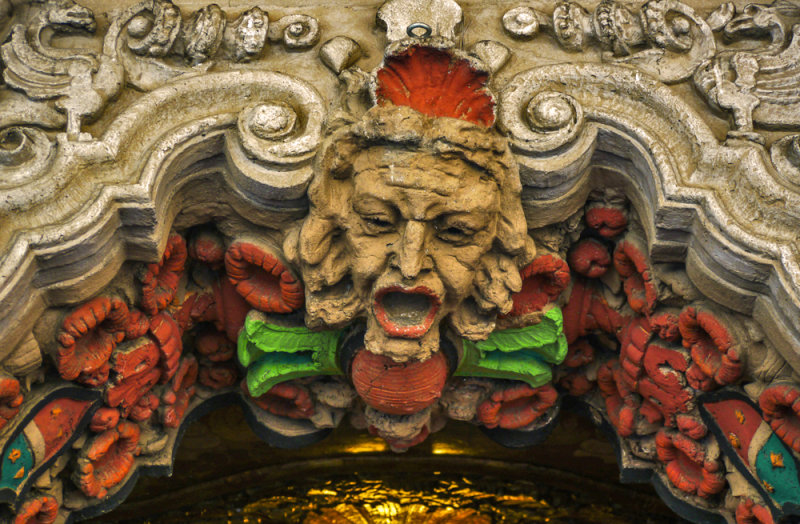
Marquee detail, El Capitan Theatre, Hollywood, California, 2012
My close-up view of the marquee detail hanging just over the box office of Hollywood’s El Capitan Theatre features an ornate theatrical mask, surrounded by the extravagant layers of colorful decorative ornamentation common to the period. These colors seem to be somewhat faded, and look as if they may be original to the period when the El Capitan opened as a legitimate theatre in 1926. This detail echoes the very beginnings of Hollywood’s theatrical mystique. For decades, the El Capitan, presented live plays but fell on hard times in 1941. It was remodeled and renamed the Hollywood Paramount Theatre, becoming the west coast flagship for Paramount Pictures. Fifty years later, it was purchased by Disney and restored to its former grandeur. Important details such as these were reclaimed, bringing a piece of Hollywood's history back to life.
20-APR-2011
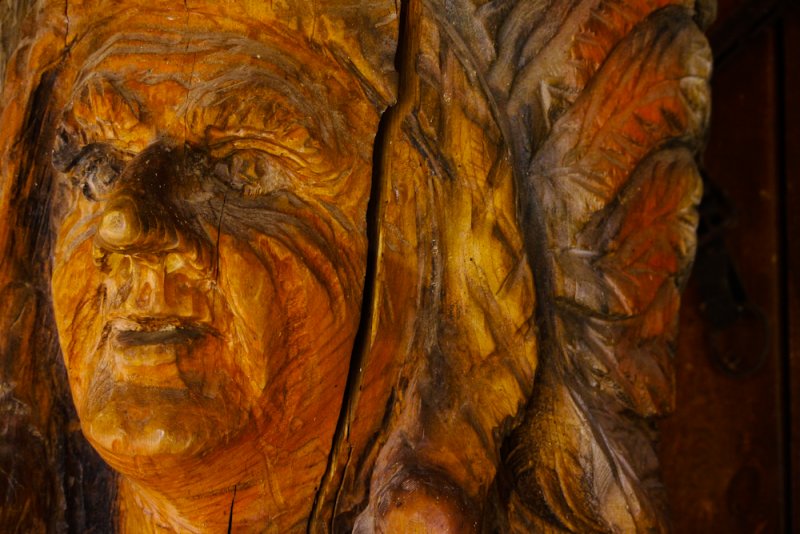
Saloon sculpture, Tortilla Flat, Arizona, 2011
This life sized wooden sculpture of a Native American chieftain stands outside the one saloon in this mountain crossroads hamlet. I was struck by the power of the detail brought out by the sculptor's chisel. I moved in very close to define the craftsmanship that went into this effort by emphasizing those key details that bring out the character of the piece. This image reveals traces of the paint that perhaps originally covered it. As the paint vanished, the craft emerges.
23-DEC-2010
Carnival conversation, Olinda, Brazil, 2010
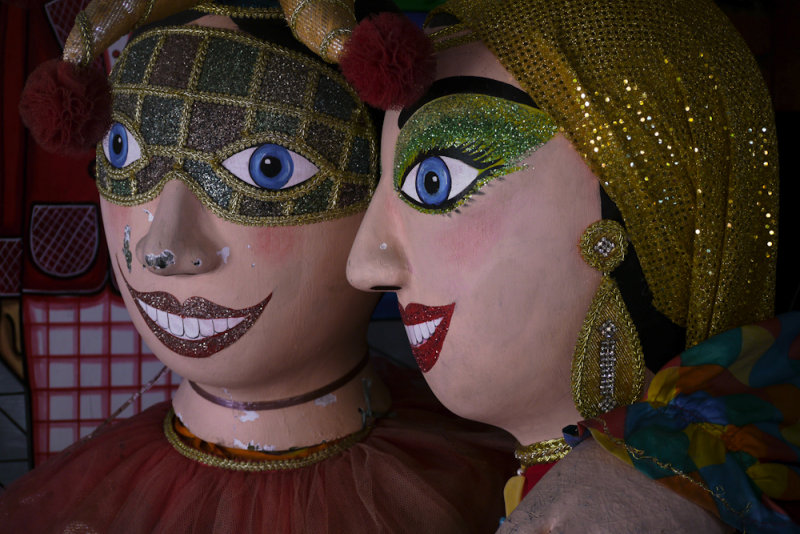
Two carnival figures seem to be conversing in this Olinda gallery. What struck me was the detail here – the wealth of decoration in the mask and head-pieces, and most strikingly, the incongruous damage to the face of the male figure. In spite of the damage, he still maintains his toothy smile.
21-DEC-2010
Church of St. Francis, Salvador de Bahia, Brazil, 2010
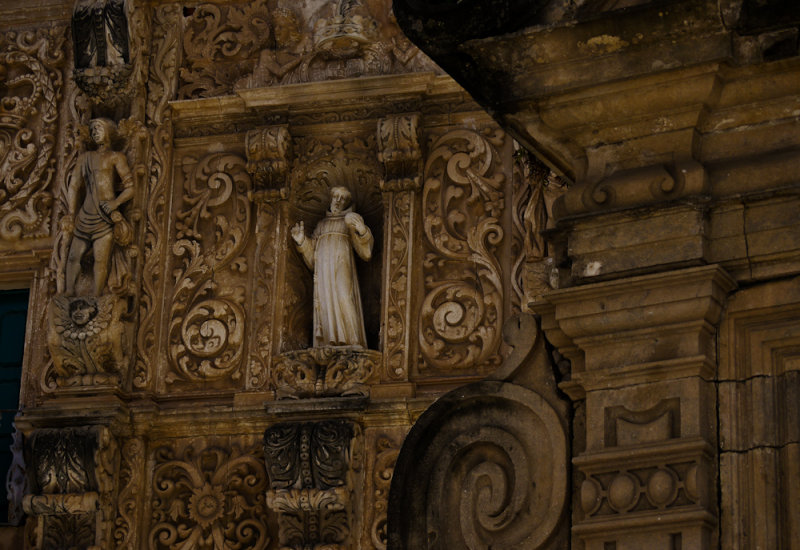
The detail here is overwhelming. The dominant details are the statues of St. Francis and a native figure. This 18th century façade was designed to draw the eye and tell a story, and it is the massive wealth of detail that provides the decorative embellishment designed to impress and inspire.
18-DEC-2010
Electrical issues, Rio de Janeiro, 2010
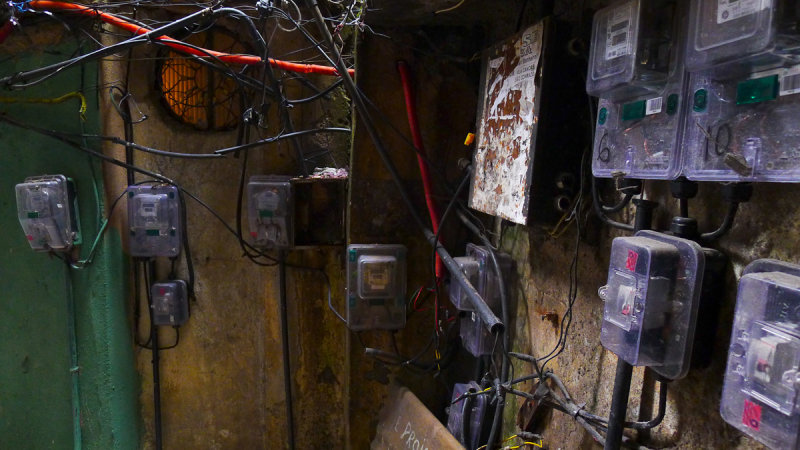
These meters record the electricity used by a group of homes in one of Rio’s crowded favelas. My wideangle image stresses the nightmarish complexity of connections in detail here. The imagination can only guess at what those who maintain and use such wiring must risk.
20-NOV-2009
Silver Service, USS Arizona, Arizona State Capitol Museum, Phoenix, Arizona, 2009
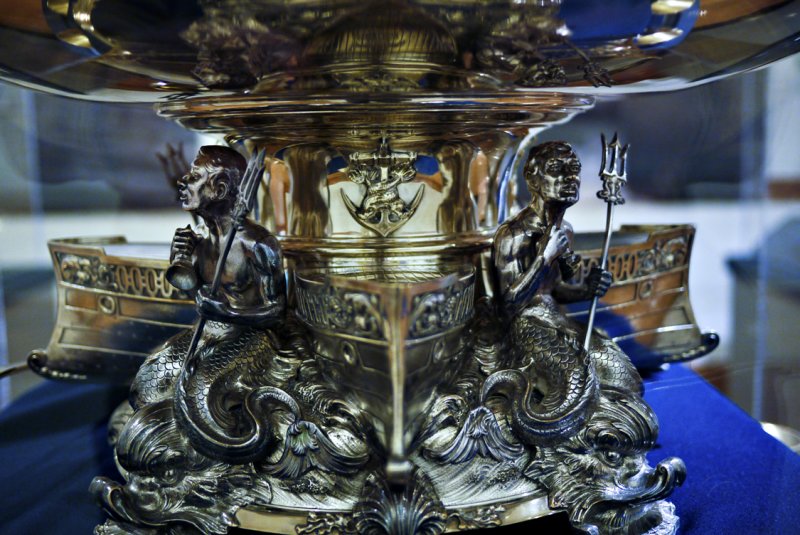
The US battleship “Arizona,” was sent to the bottom of Pearl Harbor on December 7, 1941 by Japanese torpedoes, igniting the Second World War. The ship, along with the remains of over a thousand sailors, is still entombed in the mud at the bottom Pearl Harbor. Fortunately for history, its lavish silver service, used for state dinners when the ship was touring the world in the 1930s, was not aboard the Arizona when it was destroyed. The sterling silver plates, pitchers, bowls, and servers were away for refinishing. Today, the silver service is displayed under Plexiglas in the Arizona State Capitol Museum. I brought my lens very close to the case displaying an ornate serving bowl to avoid distracting reflections. My goal was to feature detail on the two incongruously fanciful sculptures of trident wielding figures. This detail reveals lower bodies made of fish tails, sitting upon the heads of sea serpents. An anchor symbolically adorns the center of the image. The base of the bowl is made up of two ship hulls crossed at right angles. Amazingly, even with my lens wide open at f/1.7 to shoot in very low light, I was able to get most of that base in focus to show off the detail.
30-SEP-2009
Pilings, False Creek, Vancouver, Canada, 2009
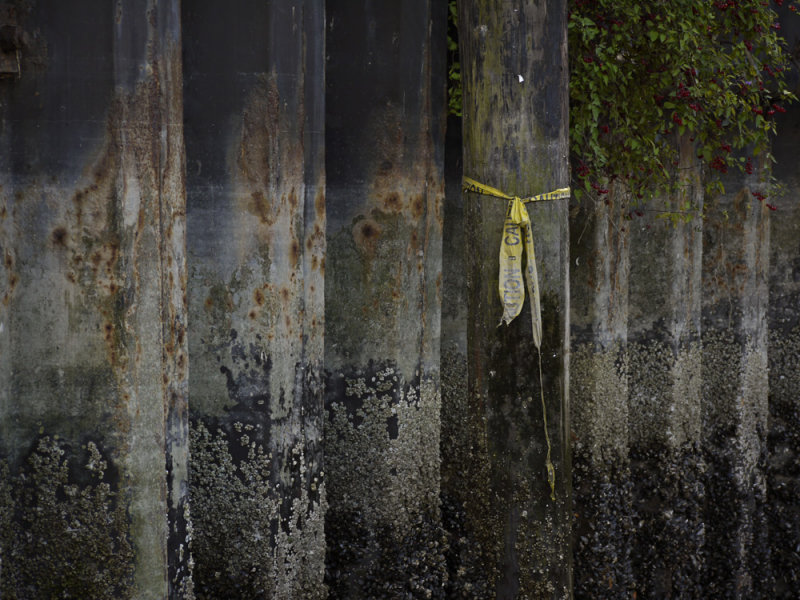
Hidden under the bustle of Vancouver’s popular Granville Island is a warren of old pilings used to support the piers serving the island. False Creek shows us a lower water level here, leaving these pilings high and dry. The darker portion is filled with crusty detail showing us the area that was once under water. The focal point of the image is in the detail as well – a “caution” ribbon, a relic of some long ago emergency, hangs on the middle piling. It marks the entrance of green plantings into the image as well.
14-APR-2009
Refreshments, Seligman, Arizona, 2009
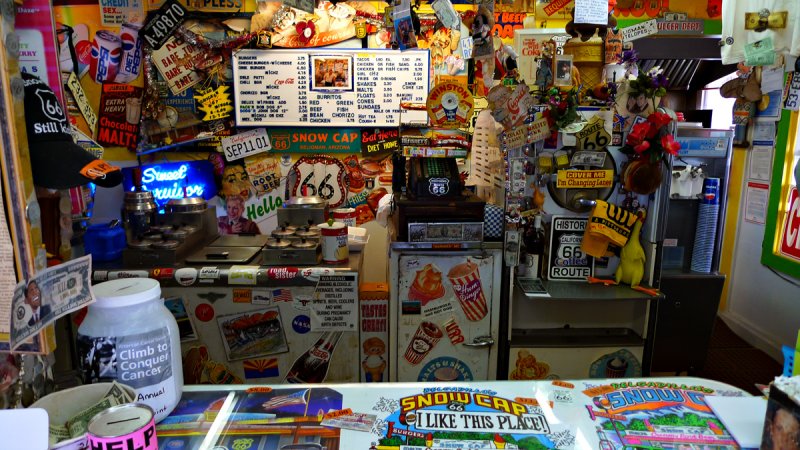
Seligman stands along historic Route 66 in Northern Arizona, bypassed by Interstate traffic and left to earn a place in the hearts of tourists in search of nostalgia. The most notable institution in Selgiman is Delgadillo’s Sno Cap Drive-in – which has been serving Route 66 travelers since 1953. Founder Juan Delgadillo delighted in incongruity, and filled his tiny shop with a blizzard of humorous signs and props. Although he died in 2004, his children continue the tradition. Anyone who visits the Sno Cap must enjoy the sea of odd details that greet them, and a joke or two comes along with every serving. This close-up wideangle image puts the viewer into the shoes of a Sno Cap customer, at least for the moment.
14-APR-2009
Hackberry General Store, Hackberry, Arizona, 2009
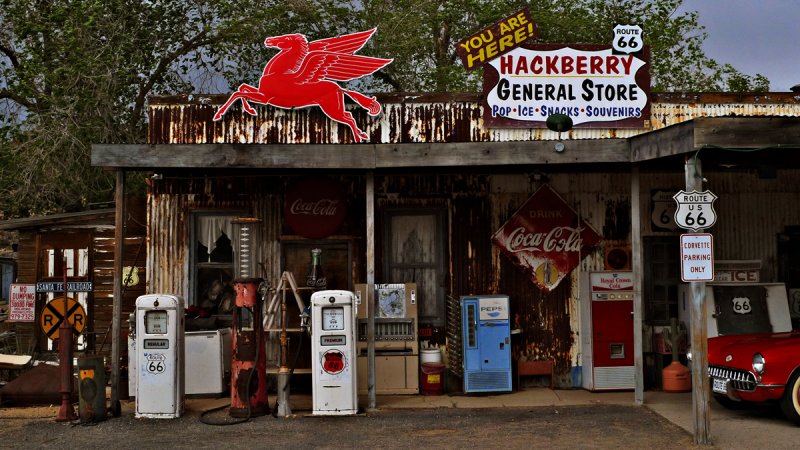
The silver mining town of Hackberry, dating back to 1874, is the oldest town along historic Route 66 in Northern Arizona. Its mine closed in 1919, and today its most notable structure is the Hackberry General Store, which is virtual museum both inside and out. In this wideangle image, I pull together some of the quirky details that give this place its character. The gas pumps are antiques, and the vending machines look almost as old. I balance the red Mobil horse on the roof with the prow of a red Corvette outside of its front door.