photo sharing and upload picture albums photo forums search pictures popular photos photography help login
Nick De Marco | profile | all galleries >> Previous Work >> My Equipment >> Film Cameras >> Leica M3 (1955) tree view | thumbnails | slideshow

Leica M3 (1955)

The Leica M3 rangefinder: one of the most important, revolutionary, quality cameras ever produced. And it is pure beauty too. First introduced by Leica in 1954, the M3 was the first of the famous Leica “M” cameras – rangefinders with extra bright viewfinders and a bayonet lens fitting. An all-metal, solid body, slightly larger than the old screw lens Leicas and with a much brighter viewfinder, the M3 was fitted with automatic 50, 90 and 135mm bright-line frames. So when you fit the lens, the M3 recognises it and the appropriate frames show up.

With many other technical innovations, the M3 far surpassed other rangefinders of the day. Companies such as Canon and Nikon who had produced decent copies of Leica screw fit cameras found they just could not compete with the technical brilliance of the M3, and so they diverted their attention to the development of Single Lens reflex (SLR) cameras instead.

Leica continued to develop the M cameras (after the M3 – counter intuitively – came the M2 and M1, then the MD, the M4, M5, M4-2, M4-P (which I have), the M6 (a highly successful model produced from 1982 until 2002) the M7, M8 and recently the MP, which is a through back to the M3. Each has its differences, but they are all fundamentally based on the M3. A camera over 50 years old which still serves as the model for the best rangefinder cameras in the world. Many people, including myself, prefer these cameras to SLRs.

I lusted after an M3 for many months before finally finding a fantastic bargain on eBay – only £255 and in very good condition (M3’s can often cost more than £500). It is an original chrome model, double stroke (you have to turn the winder one and a half times before you can shoot). The serial number tells me it was manufactured by the Wetzlar factory in Germany in 1955 – one of the first M3s.

You may think I am mad about my M3 – and you would be right. After all, in the end, it is only a machine for recording the exposure of light on film. And with the Summicron 50mm f2 lens seen on it here, I will use it for that and trust it will capture light beautifully. First and foremost it is a wonderful camera. But it is also an important part of photographic history, a wonderful piece of first class engineering built to outlast most cameras you will ever see, and, it is a work of beauty. The great Italian designer, Alessi, said that the Leica M camera body is one of the few designs of the 20th century which he thought was so perfect he would never try to change. This gallery is dedicated to its genius.
Leica M3
Leica M3
Back view
Back view
Serial number and shutter speed
Back open
Back open
The name
The name
Top view
Top view
Chrome bottom plate
Chrome bottom plate
With bottom off
With bottom off
Ripon and Frank - Triple Exposure
Portrait with a classic
Valley in Velvia
Valley in Velvia
Bessa 3A with breakfast
Fiat Grille and Headlamps - triple exposure
Lunch in the garden
Lunch in the garden
Portrait in the kitchen
Hilltop village
Hilltop village
Mario - velvia portrait
Conversation
Conversation
At desk
At desk
Velvia Valley 2
Velvia Valley 2
Velvia low light portrait
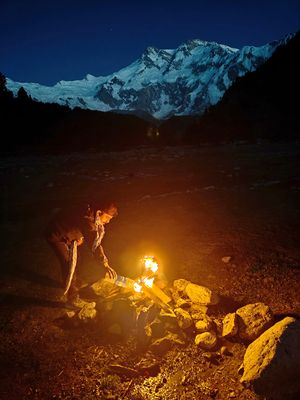
Mountain and lamp
Mountain and lamp