05-APR-2012
If You Don't Know How To Solder.....
If you really don't know how to solder a VHF PL259 connector there are other options as you'll see below.
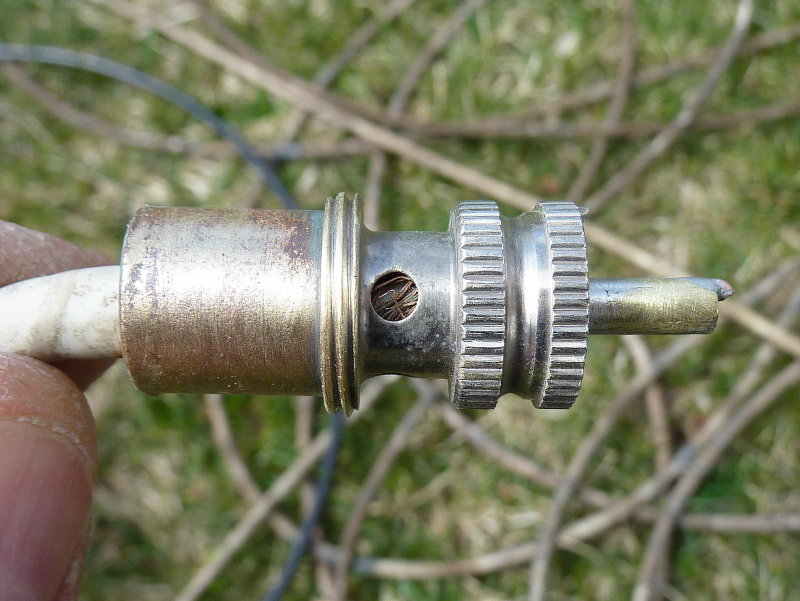
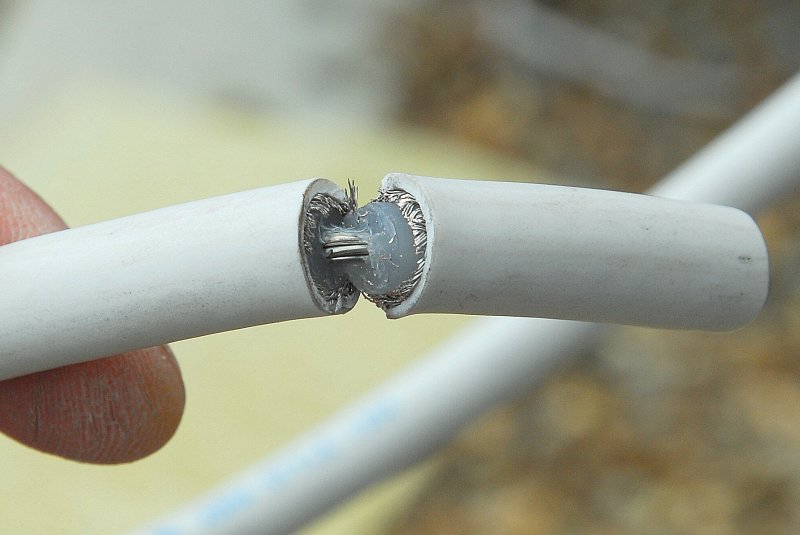
This one is no joke except that when this owner needed his VHF it was no joke or laughing matter that it failed to TX.
The previous owner or boat yard employee decided that solder on the shield for the VHF cable was optional. It worked for a short while, weakly, and then failed all together. Those holes are where the solder would go to contact the shield or braided portion of the wire.
25-JUL-2012
I know It's Tempting
I know it is tempting to buy the marketing hype and try the "easy" VHF PL259 connectors sold by companies such as Shakespeare, but please consider the consequences of a failed connection.
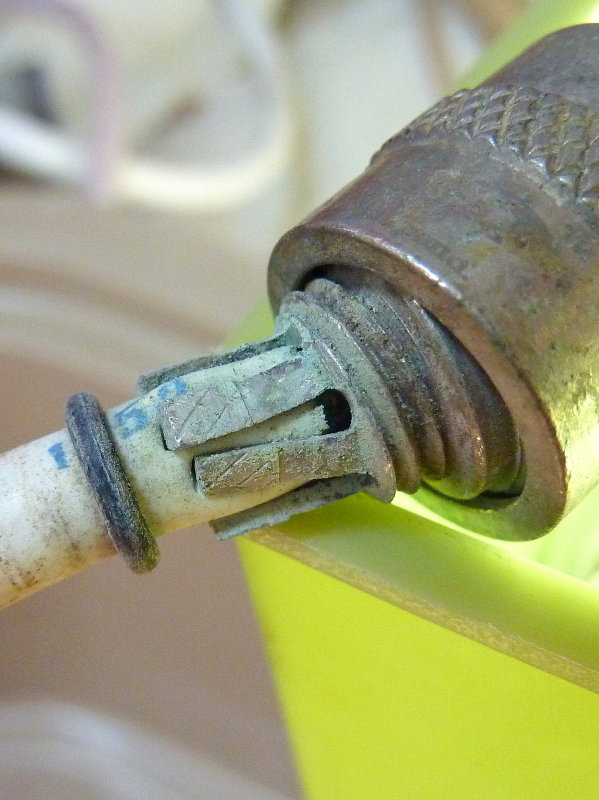
The Shakespeare connector pictured was passing zero signal in just two years. It did a horrible job of keeping moisture out and also contacting the shield via the "piercings" through the VHF cable jacket. Other than poor solder jobs this is by far and away the number one type of connecter I see failed in the marine environment.
The VHF radio, is your vessel is so equipped, is a safety device and also a federal requirement to monitor when underway. Cutting corners like this on your VHF connections can be a costly, or even potentially deadly mistake.
09-MAY-2009
This Was 9 Weeks Old
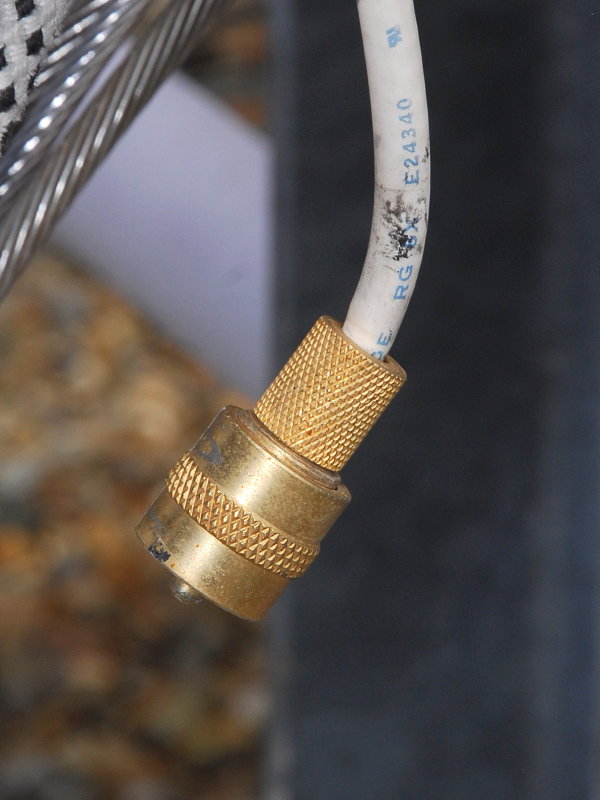
As I mentioned I know it is tempting given all the marketing hype about these "piercing" connectors but the reality is they can be flat out dangerous.
This was was just 9 weeks into its life when it failed to work. Owner claims it was installed precisely & exactly to the instructions and in taking it apart it appeared to be as well installed as could be expected.
Use extreme caution using this type of connector.
15-NOV-2009
RG-213 vs. RG-58U
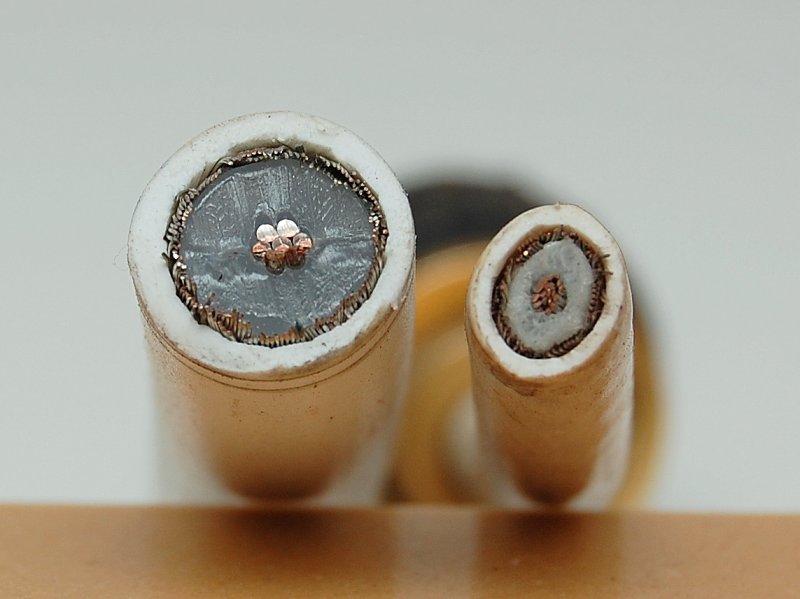
With many things bigger is not always better but with VHF coax bigger usually is better. This is a visual comparison of Ancor Marine RG-213 and RG-58U. The signal loss for RG-213 at 100' is -2.7dB and for RG-58U it is -6.1 dB.
If you want a truly great VHF coax cable stay away from Ancor or the other "marine" coax cables and instead look towards Times Microwave LMR 400 Ultraflex or the Belden cables. The LMR 400 Ultraflex offers a -1.5 dB loss which is outstanding. Many of the hard core Ham radio guys swear by Times and Belden coax. I got my Ancor RG-213 for free, so I used it. Would it be my first choice now that I am aware of the LMR 400 Ultraflex? No, but if you get a good deal on any RG-8 or RG-213 you might as well use it.
I have learned a lot from my ham buddies but am sure I will be schooled after writing this. This article is written for the DIY boater who does not want to know more than they absolutely need to about coax or terminations. The die hard Ham's will debate for hours on solder vs. crimp terminations but I think, for boaters, I have found a solution that bridges the best of both worlds with a solder and a crimp. It is easy, and quick, and a lot more reliable than those Shakespeare quick connect terminals..
09-MAY-2009
Strip Wire
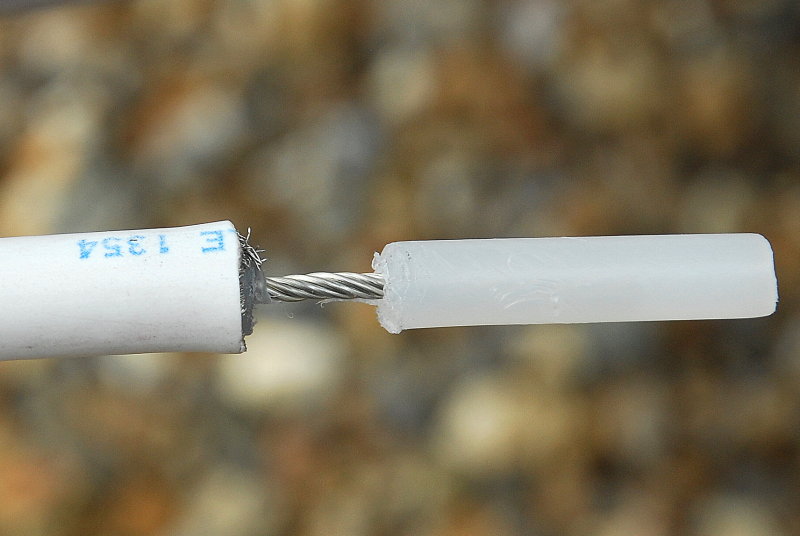
I won't get to technical here as I want this to be simple for the average DIY boater. I used my Leatherman to gently cut the wire jacket, shielding and dielectric. Be very careful to not score the center conductor. Once you've cut through everything pull the stripped part from the wire. I simply strip it about 3/4 to 1".
09-MAY-2009
Remove Dielectric
The shield and jacket will slide off the dielectric then you simply pull the dielectric off the end too.
09-MAY-2009
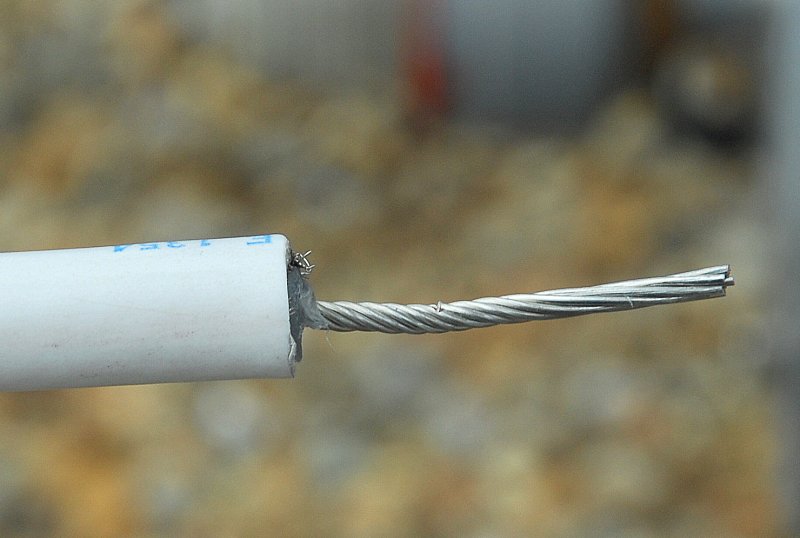
Stripped End
This is what it will look like stripped.
09-MAY-2009
PL-259 Crimp/Solder Connector
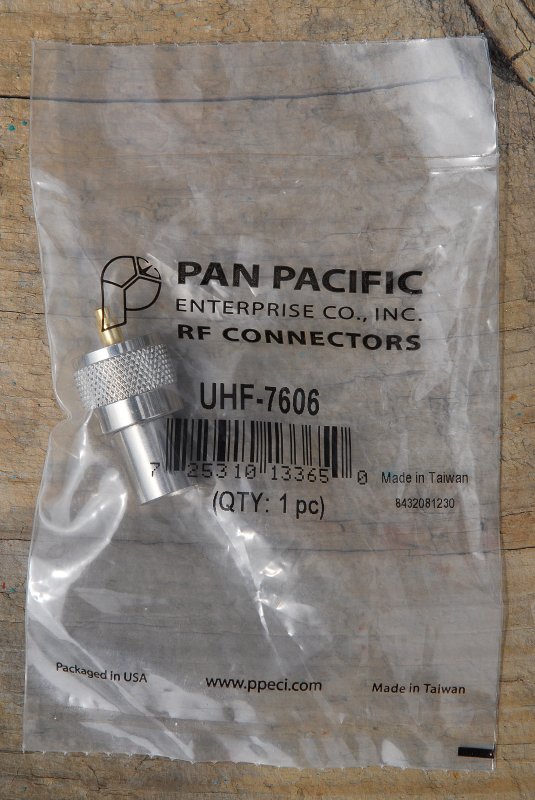
This is the Pan Pacific UHF 7606 crimp & solder connector. These are decent connectors and came highly recommended by a Ham friend. The tip is gold plated and the build is robust with good quality machining. This Pan-Pacific is reportedly the same terminal sold under the Amphenol-Connex brand part #182102 and is made in the same factory (inside sources). Amphenol-Connex is one of Amphenol's brands..
I buy my VHF terminals from HR Distributors in Portland, ME. They are located on 101 Hanover Street and they can be reached at (207) 773-2552. They will ship where ever you want and their prices are excellent.
This terminal works well with standard RG-213 but it will not fit on the Times LMR-400 coax wire. The guys at HR Distributors can tell you that part number. Times does make their own terminals and these may fit better than the UHF 7606 or an Amphenol version..
Normally I use the Amphenol 83-1SP crimp solder terminal. For this article all I had on hand that day was a Pan-Pacific. The Amphenol 83-1SP is a very good quality PL-259...
09-MAY-2009
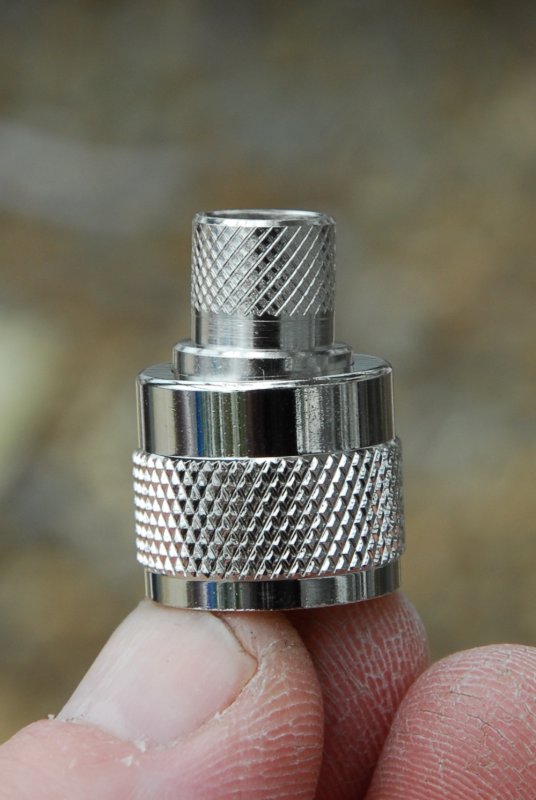
PL-259 Crimp End
The area on top, with the cross hatching, is where the shield will get crimped onto. The cross hatches help hold the shield in place and provide good strength & grip. You will want to measure this area then strip the jacket of the wire back about 1/16" - 1/8" longer than the measurement to make up for the thickness of the barrel. If you strip it longer no worries because you can just trim the shield shorter as necessary.
09-MAY-2009
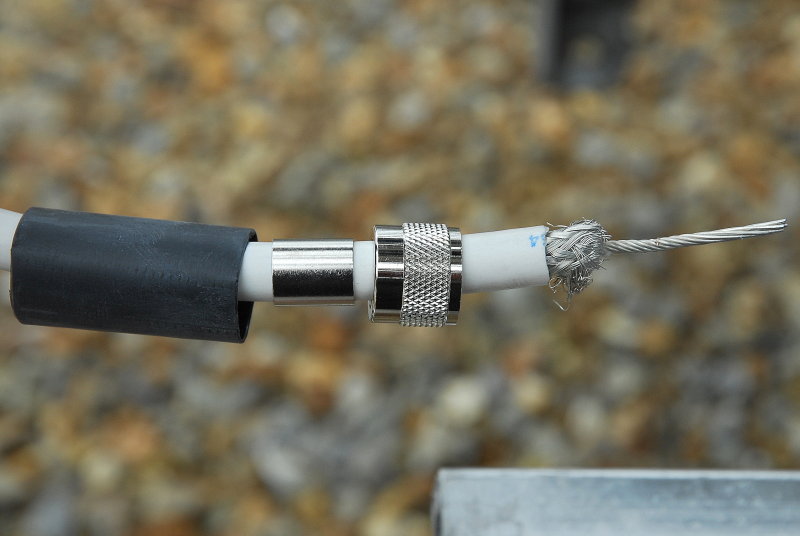
Slide On The Coponents
After stripping the jacket back you'll want to slide on some adhesive lined heat shrink, the crimp band and the threaded nut. That shield looked much better before I dropped the wire end into the gravel at the Mast rack.
09-MAY-2009
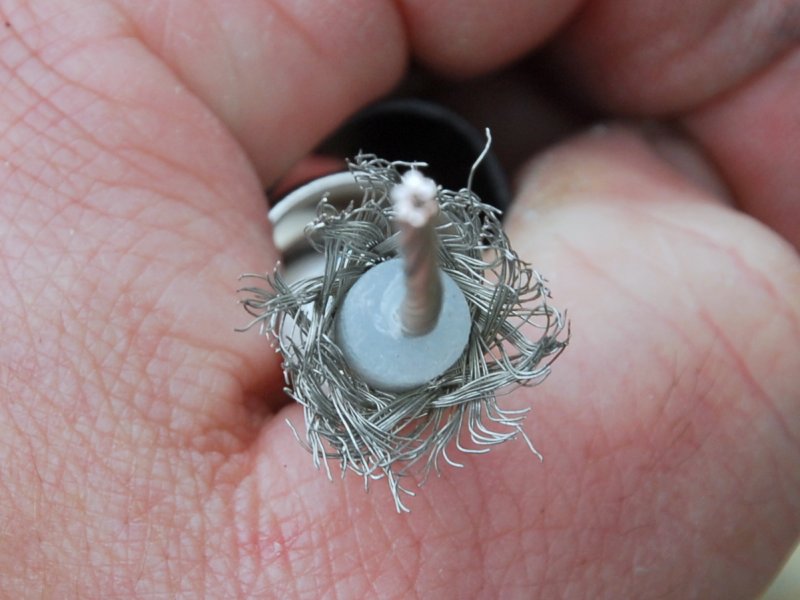
Carefully Flare Out The Shield
Carefully flare out the shield so you can slide the connector up and over the dielectric. Ideally one would use a coax stripper for cleaner cuts but I try to write these articles with the minimal amount of tool investment to get the job done. You'll already need a .429" crimper to use this method anyway. If you want to spring for a coax stripper, it is a good investment, as you can usually use them on other types of coax too.
09-MAY-2009
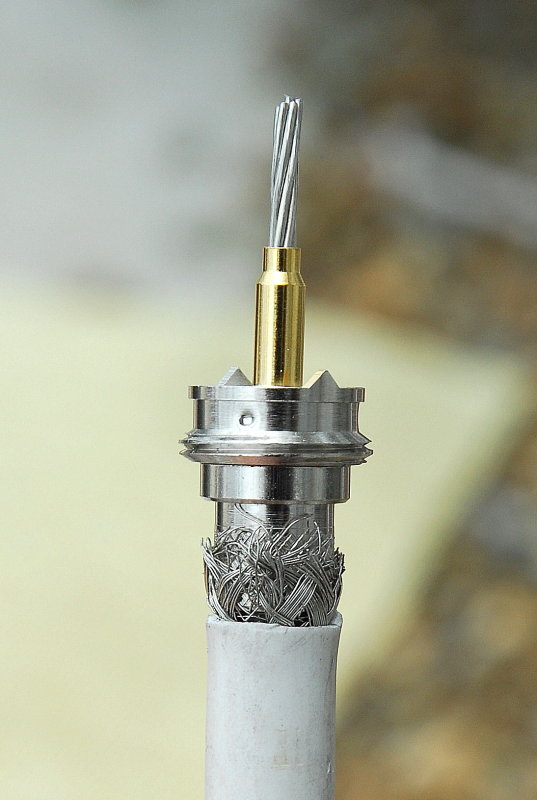
Slide On The PL-259 Conenctor
In this picture the shield is actually a little bit to short. If this happens you'll want to strip the jacket back a little further. Ideally you want the shield to go up to the lip on the connector, but not beyond it.