11-JAN-2008
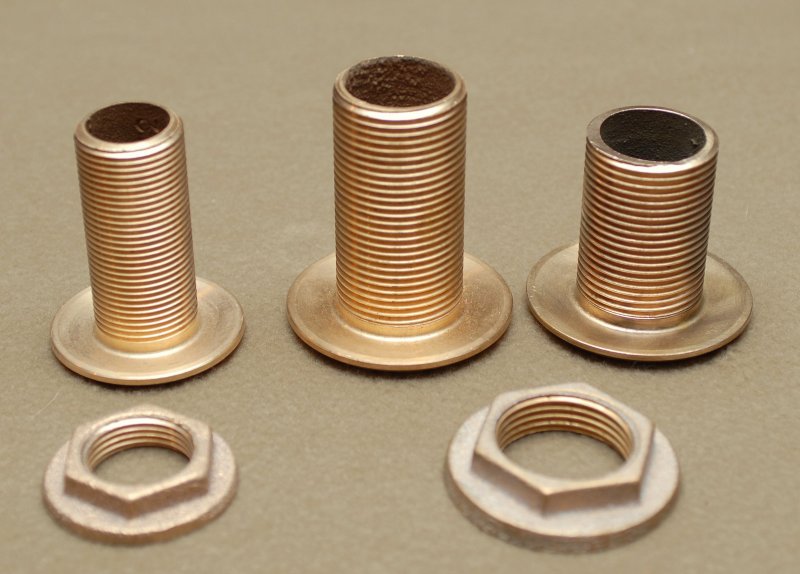
These are called Thru-Hulls
This item is called a thru-hull or sometimes a "mushroom head". They are straight threaded (NPS thread) so they can be cut to the correct length for your hulls thickness and then be threaded into a female straight threaded seacock or a flanged adapter. The one on the right has already been cut to length. Most all thru-huls installed into proper seacocks will need to be cut to the proper length.
When installing them with a proper seacock the nuts are not used.
*AS ALWAYS CLICK ON ANY PHOTO TO MAKE IT BIGGER
22-FEB-2008
Preferred & Non-Preferred Installations
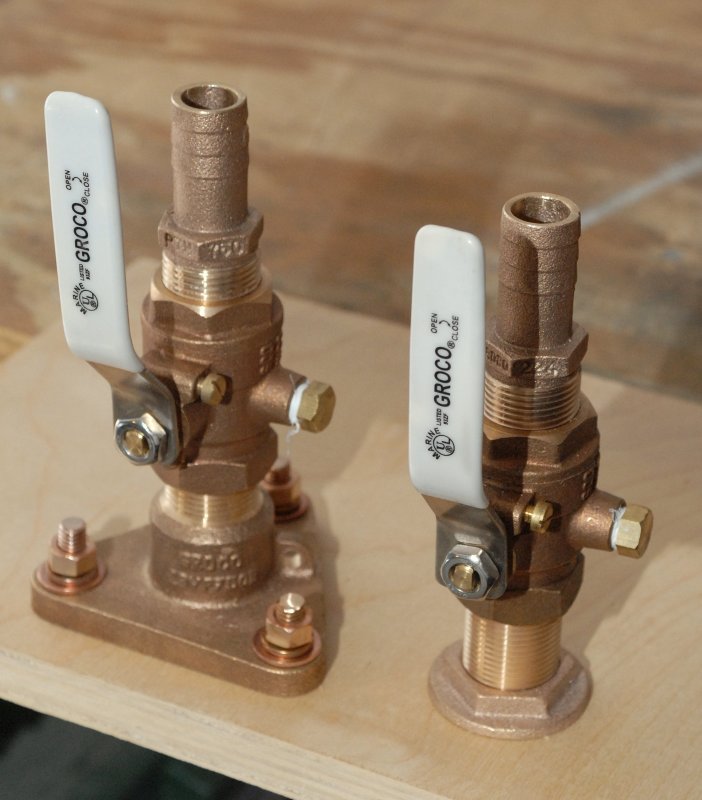
The example on the left side of the photo is the preferred method for installing a proper seacock. The preferred method includes a wide base flange for strength and the ability to through-bolt or screw the flange to the boat.
The example on the right side of the photo is the non-preferred method of installation and has a number of down falls.
The most obvious weakness is the fact that there is nothing to keep the thru-hull from possibly twisting when turning the handle to open of close the valve. The only thing holding this thru-hull to the boat is some marine sealant and that very small lock nut. The second issue, is not so obvious, but, still just as scary. A thru-hull fitting is NPS or straight thread and the bronze ball valve is NPT or tapered thread. This installation can cause an improper mismatching of thread types which you will read about bellow.
The third major issue is strength. Simply threading a ball valve onto a thru-hull fitting, without a flange, creates a weak point in which the thru-hull could possibly snap off or break if anything substantial were to hit it in rough seas. A mishap like this happened to me when a spare alternator fell off a shelf in rough weather and cracked my thru-hull fitting. This is part of the reason I wrote the blog about installing proper seacocks and this primer to show why to do it the right way.
Why Is It a Bad Idea ?
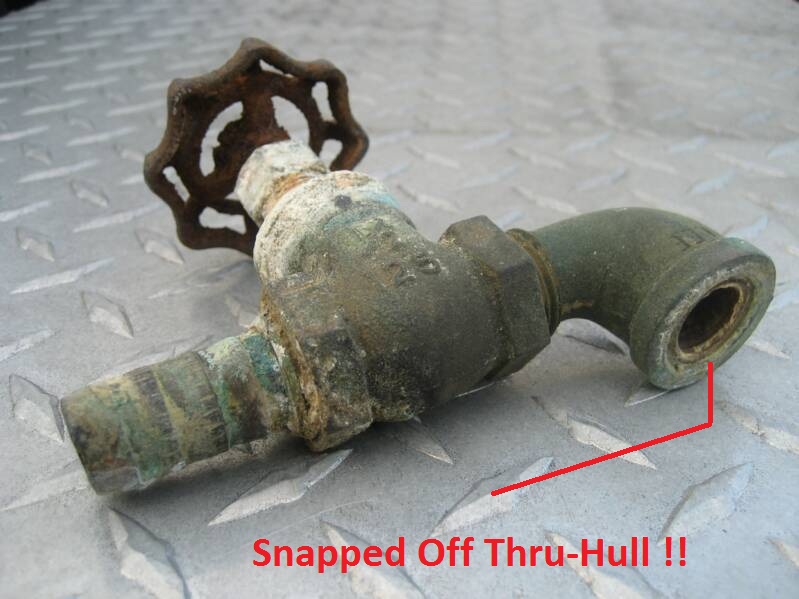
This photo is a picture of a US production sailboat seacock assembly as shipped from the factory. While this builder no longer uses gate valves they still, to this day, install seacocks using this same method.
This owner simply wanted to remove the gate valve and replace it. When a slight pressure was applied, not even enough to break the threads free, or spin the thru-hull in the hull, the thru-hull snapped off and he was left holding the valve assembly in his hands. WOW!!!!!
This owner installed through bolted "proper" flanged seacocks. This could happen to anyone with this type of installation and this owner is just lucky it did not happen while off sailing.
If you look close you can still see the broken thru-hull still in the bronze elbow..
11-JAN-2008
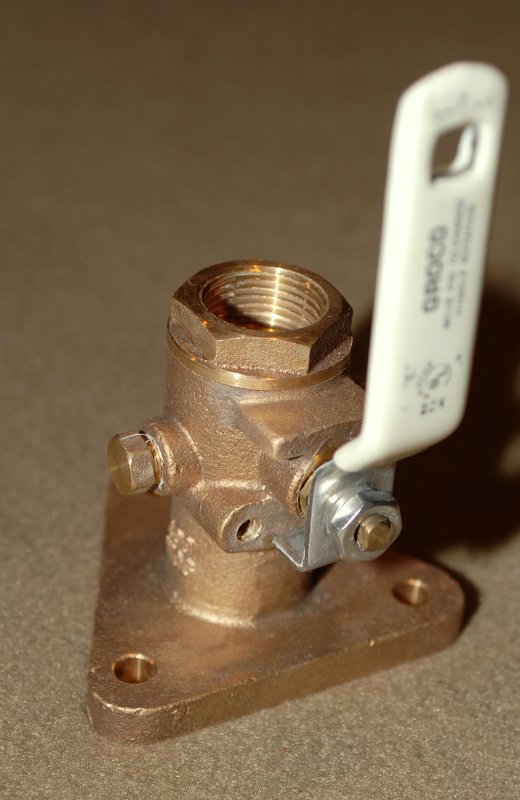
This Is a Proper Seacock
This item is called a seacock. A proper seacock has a flange that gets bolted to or through the hull. The seacock's purpose is to provide a positive shut off from water ingress. Flanged seacocks are considerably stronger than threading an in-line valve directly onto a thru-hull and are usually made of bronze, marelon or in some cases stainless steel.
There are many different brands of marine rated seacocks from companies like Groco, Spartan, RC Marine/Forespar, Apollo and more.
08-JUN-2007
This is NOT a seacock!
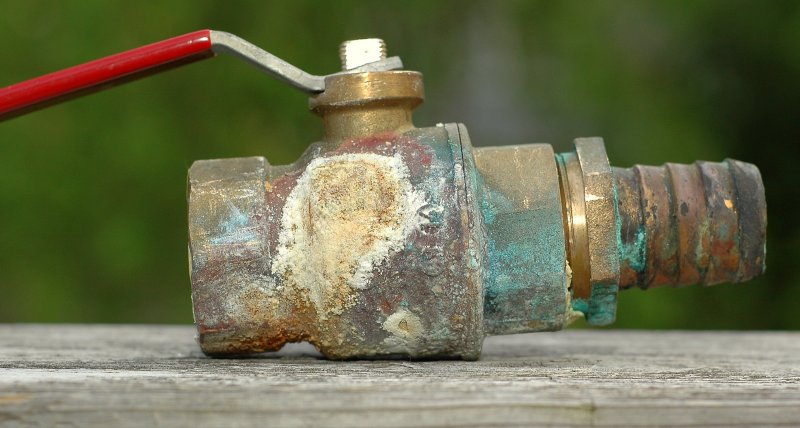
The title says it all! Simply threading a ball valve, or in-line valve as pictured above, onto a thru-hull (top photo on this page) is not a proper seacock. Sure, many sailors refer to any thru-hull mounted valve as a seacock but in the proper sense threading a ball valve onto a thru-hull or mushroom head is not a "proper" seacock.
This ball valve shows what can happen, in less than a year, using cheap "yellow brass" valves purchased from Home Depot. This valve was literally a week or two away from catastrophic failure of the boat sinking type!
As I've said, and will continue to say, USE ONLY marine rated valves of either bronze, stainless steel or Marelon and DO NOT buy valves for your boat at hardware stores or home centers like Home Depot!
08-JUN-2007
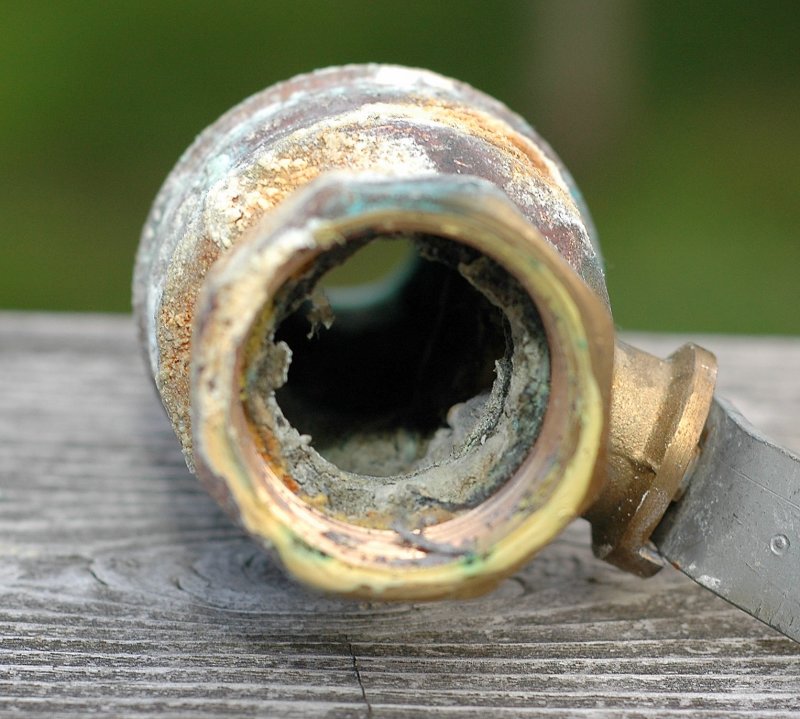
This is what happnes to Home Depot Ball Valves
As I said above NEVER use yellow brass or non-UL marine rated valves. The ball in this valve, that keeps water out of the boat, was completely gone, not there, totally missing, corroded away and never to be seen again in a little less than a years time!
Again, please DO NOT use home center or plumbing supply house brand valves & use only Marine UL rated valves & seacocks.
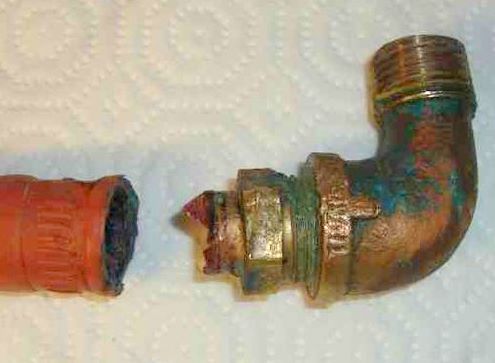
Failed Brass Hose Barb
Please DO NOT mix cheap yellow brass with proper 85-5-5-5 marine bronze below the water line. This is the result of a home center quality yellow brass hose barb when mixed with an 85-5-5-5 marine grade bronze elbow.
Yellow brass is nearly 40% zinc 60% copper and the zinc becomes the anodic metal. Dezincification, the eating away of the zinc in the fitting, can occur rapidly and is usually identified by a pinkish coppery colored brass that should have been yellowish gold. If not caught in time the item could potentially catastrophically fail and potentially put a boat on the bottom.
14-NOV-2010
Valve Literally Crumbled
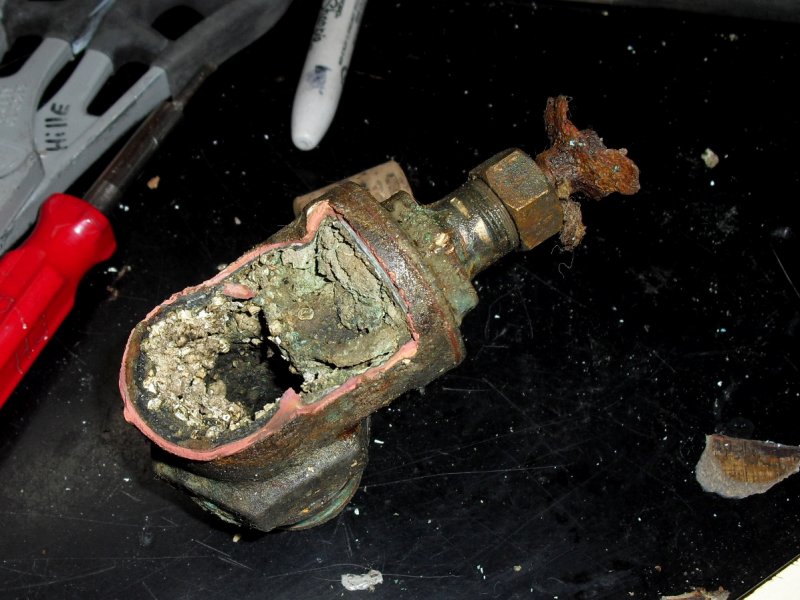
OK one more image just in case you still think you can beat the odds and buy your fittings / valves at Home Depot.
This is a good example on two fronts:
#1 This should be evidence enough of why using a gate valve no longer satisfies marine safety standards. There was no way this valve was ever going to close fully even if the handle had not crumbled away. Seacocks should always be 1/4 turn ball or tapered cone type.
#2 This was a high zinc content valve most likely sold and intended for residential plumbing applications. When the owner tied to service it the valve literally fell apart in his hands. The pinkish/coppery color illustrates complete dezincification of the valve body which left it brittle. According to the owner who sent me this photo the bronze thru-hull fitting was in perfect serviceable condition but the brass valve just crumbled like tortilla chip.
This image is WORTH clicking on to get the full size picture! Look at it, let it absorb, then think about what would happen to your boat if this had happened to you while in the middle of the Atlantic... Bone chilling is what I see.
PLEASE DO NOT USE BRASS BELOW THE WATERLINE. MAKE SURE YOUR COMPONENTS ARE MARINE UL & MARINE BRONZE OR MARELON.
29-JUN-2015
What About Plastics?
Customer: "Rod, I need your help quickly."
Me: "What's the problem?
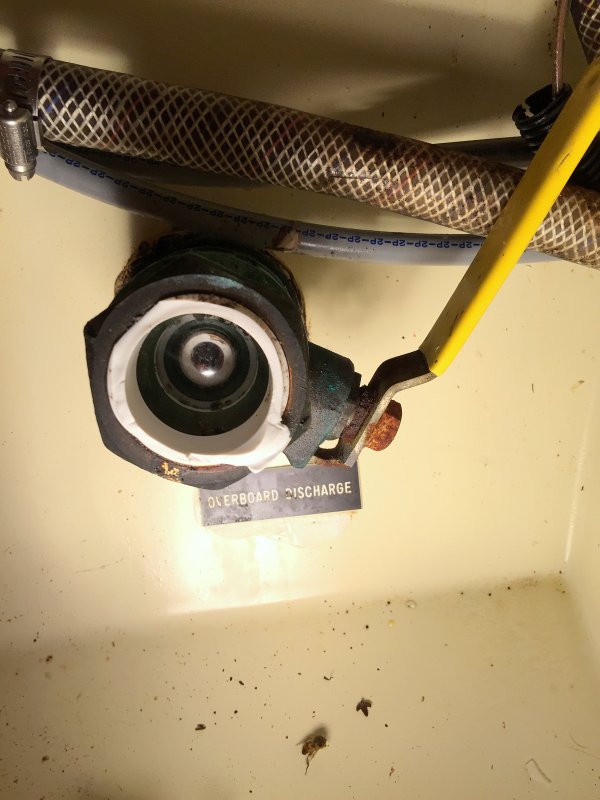
Customer: "My wife was opening the overboard discharge seacock and the piping snapped off."
There are some materials we simply do not use below water and one of those is PVC. This seacock was positioned and installed in such a manner that to open the valve you essentiually used your upper arm as a bracing point on the hose. While this customer was 18 miles off shore they went to open this valve and SNAP. Lucky for the owner his wife was able to close the 1.5" seacock before it was too much of a problem.
I now had the lovely chore of extracting the snapped off piece of PVC, without damaging the seacock threads, and re-plumbing it with the correct bronze alloy.
Marelon is really one of the only plastics suitable for below waterline application. Please DO NOT use PVC. BTW this was a factory installation from back when this builder chose to ignore the ABYC standards. Think your builder is doing it correctly? Think again....
28-JAN-2009
Brass & Bronze - How Do I Tell The Difference ?
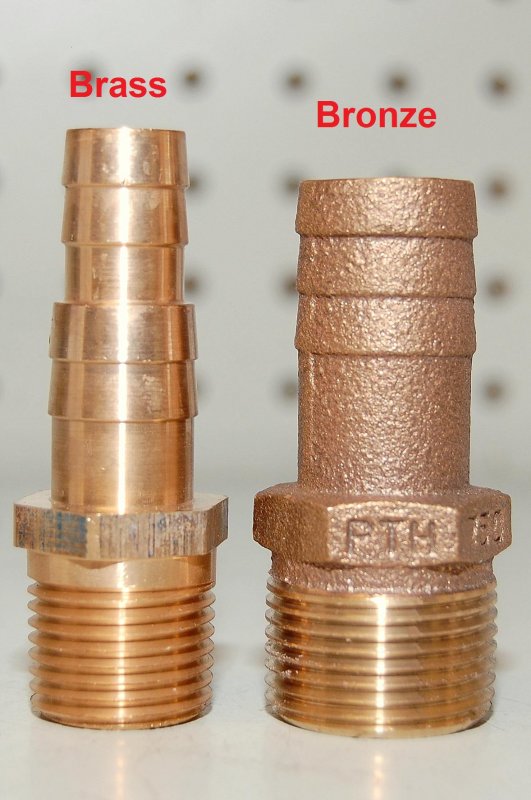
So how do I tell brass from bronze? Usually brass fittings and hose barbs are more yellow in color and more often a "machined" finish rather than a "sand cast" finish. Marine bronze does not really like to be machined so it is most often left in "sand cast" finish. Bronze is also usually more of a deep goldish color rather than on the yellow side.
When in doubt ask your chandlery. Most every fitting can be found in bronze but you need to be diligent in sourcing it. I often hear folks say that pipe nipples are not available in bronze, only red brass. While red brass is far better than yellow brass in the world of corrosion resistance, true bronze nipples are available from Groco. They are the only manufacturer I know of making them.
Here's a very good hint on how to tell if it is bronze or brass; If you bought it at Home Depot or Lowes it is NOT marine bronze...
11-JAN-2008
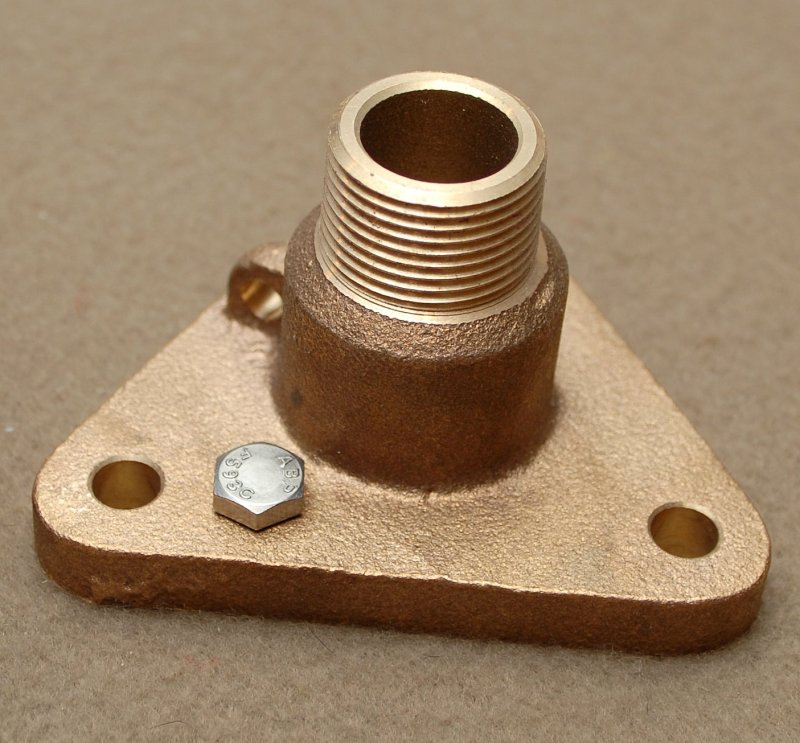
This is a Flanged Adapter Plate
This is a relatively new item in seacock technology. It allows the use of an NPT threaded ball valve on the top and a NPS threaded thru-hull then threads into the bottom.
As far as I know these are currently only made by Groco. The benefit is that even if the valve wears out you simply thread a new one onto the flange. This avoids a very time consuming job of removing the thru-hull, thru-bolts and seacock and then having to re-install these parts and fair over the bolt holes.
11-JAN-2008
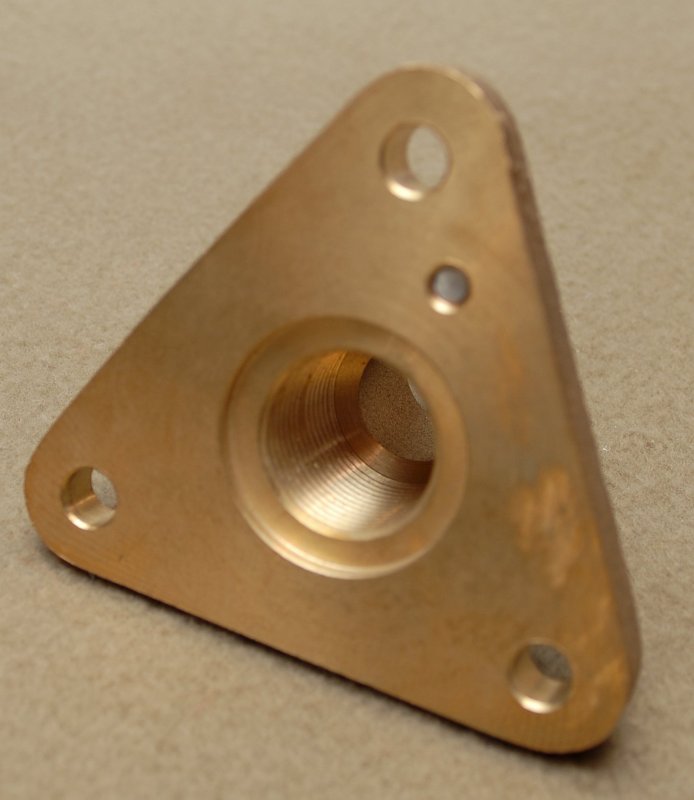
Thru-hull Threads
This photo shows where the thru-hull actually threads into. Thru-hulls are NPS thread and so is the female side of a seacock or a flanged adapter plate so the threads match perfectly.