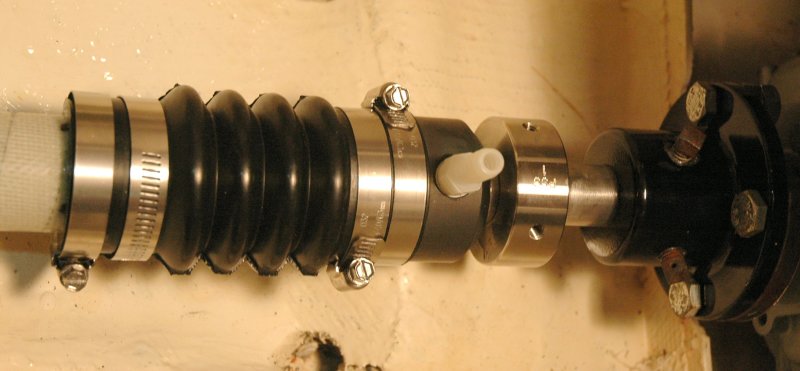
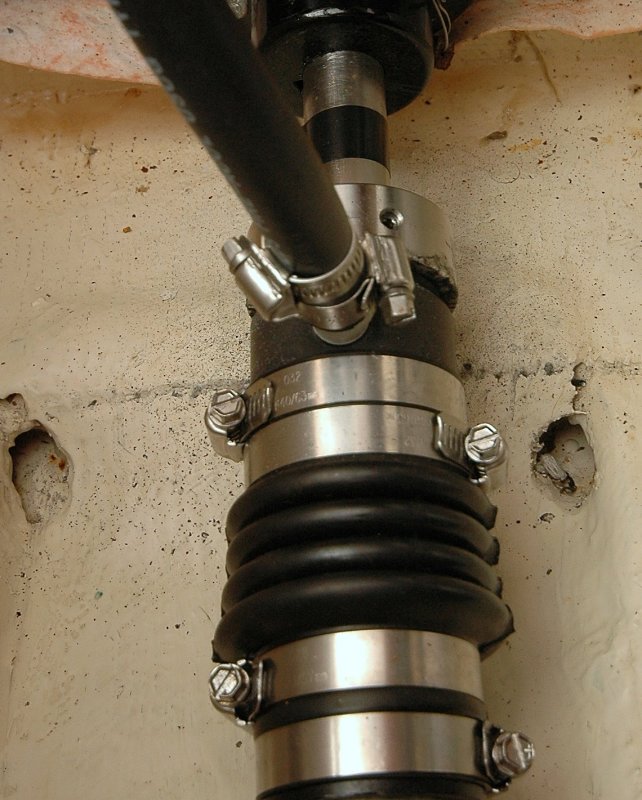
This is the order in which the PSS Seal goes together.
09-MAR-04
PSS After One Seasons Use
After an entire season all I have to show for this installation is a tiny carbon/graphite line, which is barely visible.
This is line is left over from the break in process of the face and carbon rotor smoothing each other. The bilge is now bone dry & keeping the boat as mold free as possible is a good thing.
Notice that everything below the water line is double clamped.
09-MAR-04
Vent Hose Routing
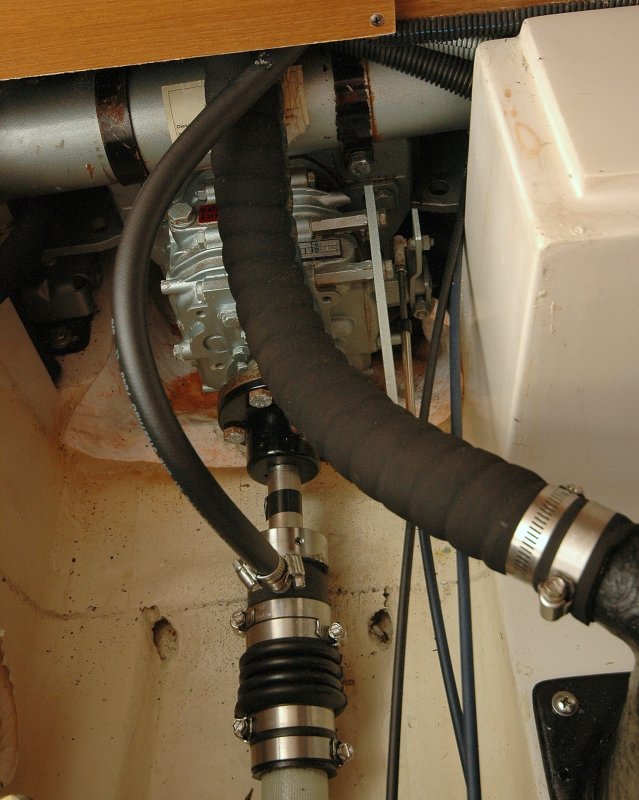
To get the vent hose above the waterline and into the engine compartment put a smooth bend with enough slack for flex and then route the hose into the engine compartment. Make sure it does not chafe on anything along the way.
09-MAR-04
Vent Hose Water Collection Bottle
The PSS vent hose is critical and intended to keep the seal faces lubricated but allowing any entrapped air to vent out of the shaft log. By venting it into the vessel you may find the vent burps when you place the boat in reverse. The reverse thrust of the prop is in a direct line of sight with the shaft seal and can force an initial burp of water up and out of the hose. The water does not continuously squirt out, and it equalizes quickly, but an initial thrust, of reverse, can push about an 1 oz of water up the tube and into the boat.
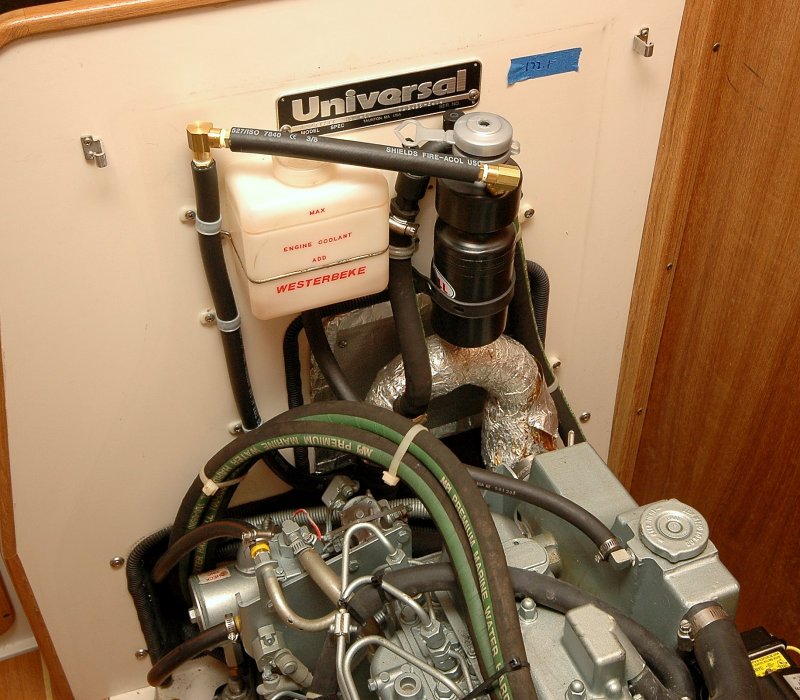
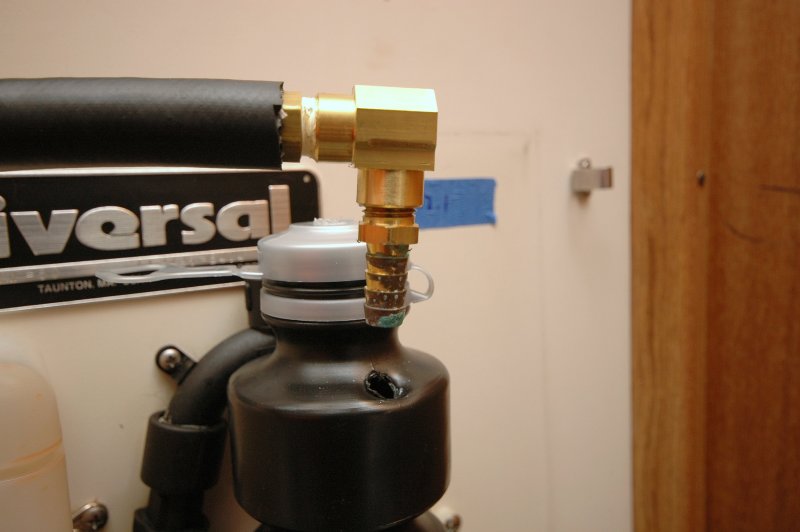
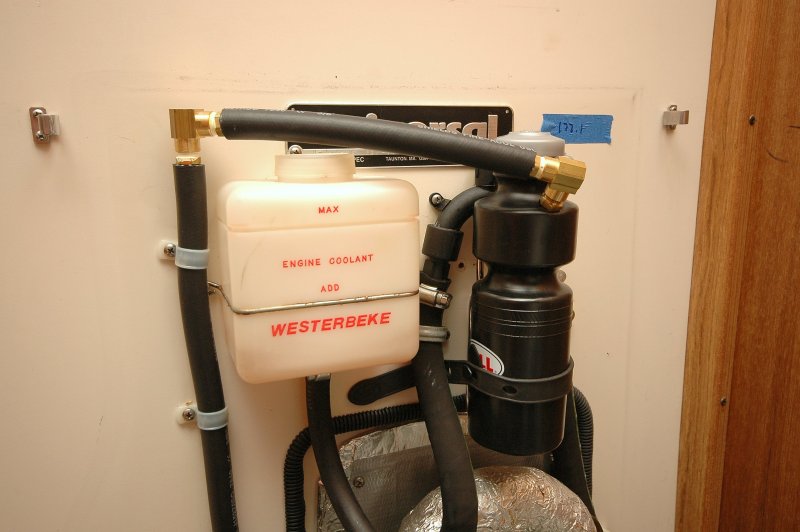
To solve this problem I’ve added, to the existing vent hose, a couple of brass elbows and a bicycle water bottle and bottle holding bracket to catch this reverse thrust water. To make sure the system was still able to vent air I made a hole in the top of the bottle to facilitate venting and routed the vent hose into the bottle below this hole. It takes about a two-four weeks of using the boat before bottle tends to get full. Just check on it when you check the oil. If you are venting a PSS internally be aware that running the engine in reverse can and will push water back into the boat..
09-MAR-04
Water Collection Bottle Vent Hose Fitting
PSS Shaft Seals are all vented so no air can become entrapped in the shaft log. An air-bound shaft log can result in the PSS running dry and becoming extremely hot. If the shaft log becomes air entrapped the rotor faces lack lubrication, and the PSS is a water lubricated shaft seal.
Despite many rumors and mistruths about slow turning shafts not needing to be plumbed or vented the reality is that even slow turning shaft vessels can develop entrapped air up in the shaft log.
The vented or plumbed hose keeps the seal faces lubricated by injecting, venting or displacing the air and allowing water to take its place. The problem is this hose needs to be routed above the waterline with no low spots if used for venting. Low spots trap water, like the p-trap under your sink, and thus preventing the venting of entrapped air.
In this Catalina 310 it was difficult to find a route that would not result in a low spot where water could become trapped. The engine compartment route was the only way I found that did not hold water or impeded the flexibility of the vent hose on the shaft seal.
Routing into the engine compartment, on this particular boat, solved this problem and the water bottle kept burped salt water off the engine. The hose barb pictured just pressure fits nicely and is easily removed to empty the bottle from reverse thrust burping.
09-MAR-04
Close Up Of Water Collection Bottle
This picture gives you a better idea of what the completed set up looks like. At first I was concerned about heat from the exhaust riser but an infrared thermometer confirmed that the bottle stays plenty cool and besides it fits well.
The blue tape on the back wall is a reminder of the engine hours when I last changed the oil. It's a crude system but it keeps a good in-compartment oil-change record.
Hydronic Heating System Hy-Vent® used as the Air Vent
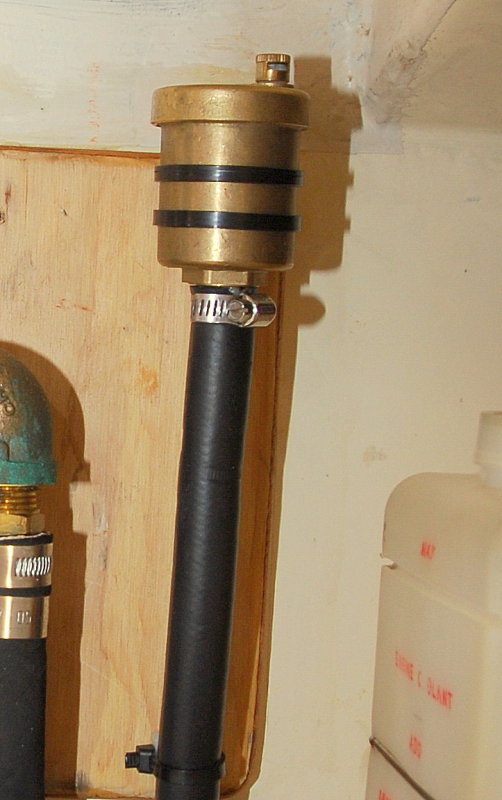
While the water bottle worked, I found it to be a less than elegant solution than I was happy with. I decided to use a Taco model 400 Hy-Vent® instead. These are available at most any plumbing supply house.
Please don’t ask for a Taco, as in the Mexican food, the company is pronounced it Tay-Co. The Hy-Vent® I use is a 1/8″ male NPT version and it’s then connected to a hose adapter. I’ve had these in use now for over 12 years, with zero issues. I initially thought I may need to rinse it of salt yearly but that has not been necessary. They have not leaked on me and not trapped any air either. Being that these should be installed well above the static & heeled waterline, and they are empty of salt water 99.98% of the time, they don’t need to be a “marine bronze”. If it were to corrode simply dig into the pocket for about $9.00 and its fixed.
The Taco Hy-Vent® uses a plastic float connected to a Schrader type vale inside the brass body. When the vent is full of water the float closes the Schrader type valve making the system water tight. A reverse burp causes the float to shut the valve. If there is no water present the Schrader valve opens to allow air to vent out of the system. These are simple devices and not very expensive, about $9.00 at a plumbing supply house.
The PSS Shaft Seal is a reliable time proven system that keeps your bilges dry. Every issue I have ever heard of involving a PSS seal involved installation or user error. Follow the instructions, replace the bellows per PYI’s time schedule and the PSS is a reliable work horse.
Good luck and happy boating!
MAY-2006
Help Support This Site
Like what you saw or read in this article? Was it helpful? Could the information save you some money? Would you like to see more articles like this?
If so feel free to donate, support the site, and keep it growing. Please DO NOT feel obligated at all. If you like it and want to make a donation, please do. Your donations help keep the content coming and also help keep it FREE.
Click the DONATE button below if you would like to make a donation via PayPal.