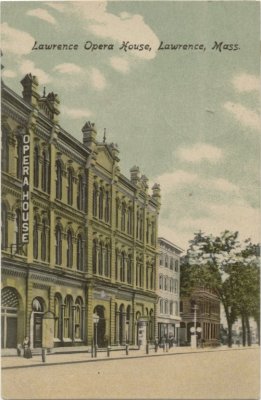
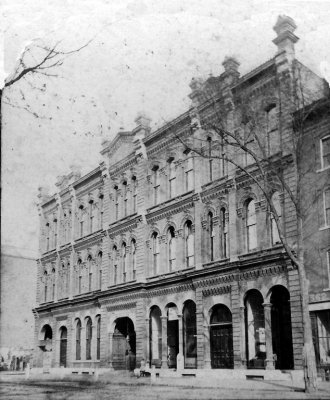
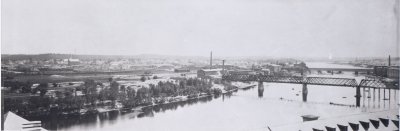
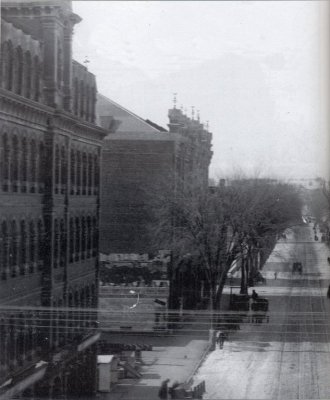
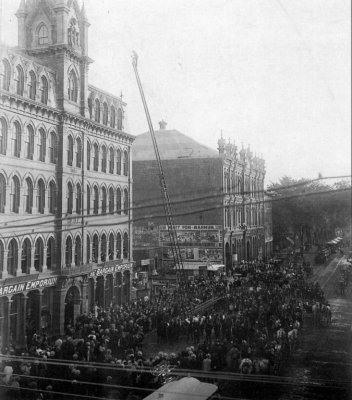
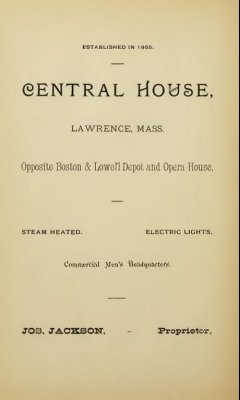
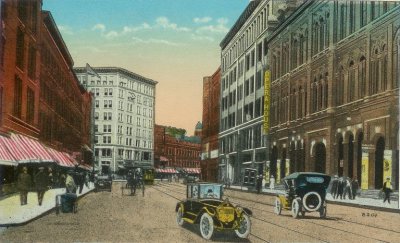
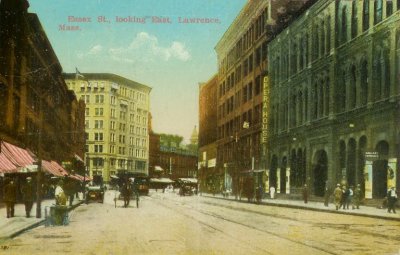
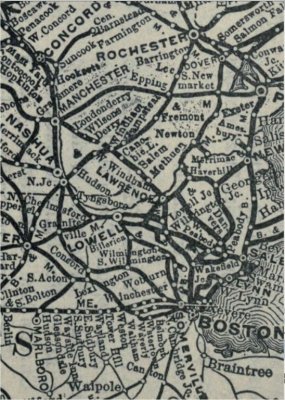
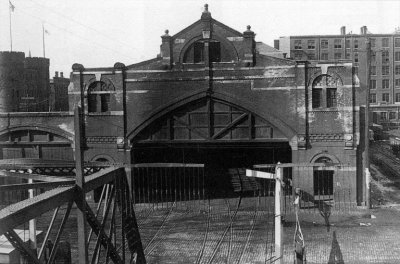
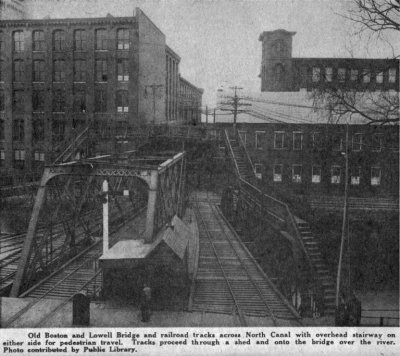
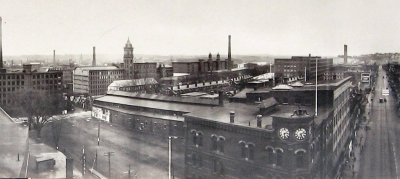
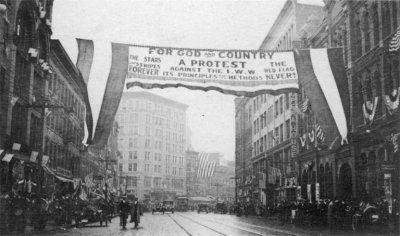
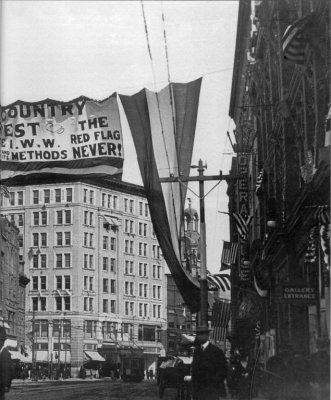
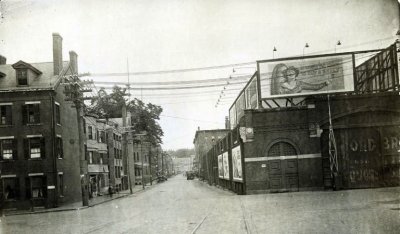
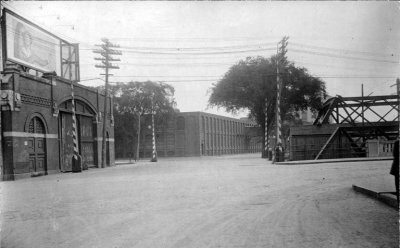
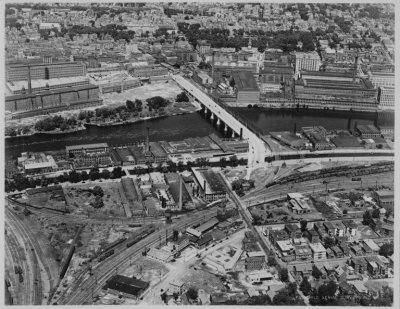
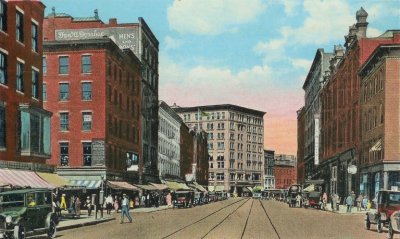
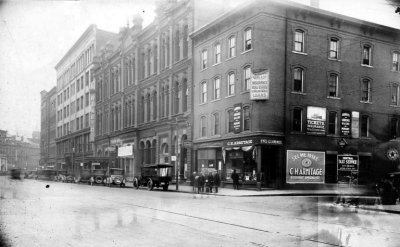
The Lawrence Opera House at 326 Essex St. was built by the Boston & Lowell Railroad from 1878 to 1880, around the same time that a Grand Depot was built for the Manchester and Lawrence line several blocks west down Essex St. Their depot was in the first floor of the building along with Western Union offices. The first common carrier railroad chartered in New England, the B&L was chartered in 1830 and began service in 1835. By 1853 it had acquired the Lowell & Lawrence RR which opened in 1848 essentially to keep it out of the hands of the Boston & Maine who would later acquire the Manchester and Lawrence line in 1887. As the rivalry with the B&M intensified the B&L built its own bridge across the Merrimack as it built the Opera House giving it direct access to downtown Lawrence.
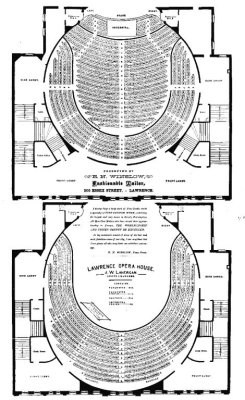
The Romanesque style Opera House contained a first class entertainment hall and circular balcony on its top two floors and was considered the most ornamental building in the city. A seating chart specified seating at 610 on the parquette, 572 in the parquette circle, 614 in the balcony and 36 in the orchestra, totaling 1832. It opened on May 26, 1881 with Maggie Mitchell appearing in "Jane Eyre." It was used to host a multitude of entertainment from opera and legitimate theatre to movies and sporting events. On July 2, 1884, a wrestling match there between Ed Decker and John McMahon resulted in a draw. A rematch there on Sept. 10 was won by McMahon. By 1887 the B&L, unable to successfully compete, was leased to the B&M which ultimately would acquire most of the other smaller area railroads.
One of the first managers of the Opera House was J. W. Lanergan. Born in Taunton, MA, he was a veteran actor, and according to his 1886 obituary, one of the best known men in the profession in the East. He died unexpectedly at the age of 57.
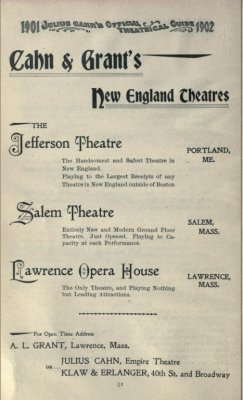
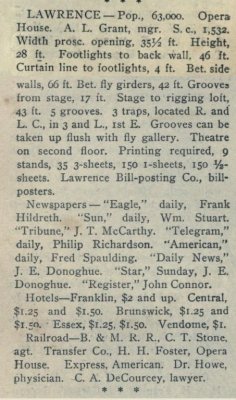
In the mid-nineteenth century, stock companies rose in number and often traveled and by the early 1870s, there were about 50 resident stock companies in the country. In 1886, a group of booking agents and managers formed a partnership known as the Theatrical Trust (or Syndicate). For approximately thirty years, the Syndicate controlled virtually all bookings at professional theaters. By 1901 the Opera House was licensed and operated by Julius Cahn, owner of the Empire theater in New York, and his partner A. L. Grant. In addition, since 1896 Cahn published a guide known as "Julius Cahn's Official Theatrical Guide." It was considered the authoritative source for information required by booking agents and producers who were taking shows on the road. State by state and city by city, it provided details on all playhouses as well as town population figures, newspapers, hotels, and railroads. In 1901 they listed the Opera House as having a seating capacity at 1532. The stage was 35 1/2 ft. wide, 28 ft high and 46 ft. deep. Cahn, by 1914, would be listed as licensing the Lowell Opera House as well.
In the fall of 1913 the 8 reel film "Quo Vadis?" had a week-long run at the Opera House. Tickets were 25 to 50 cents.
In 1914, Moving Picture World magazine (Vol. 19. No. 3 January 17, 1914) announced that Cordelia Vien, "of the Vien's Theater of New Bedford. Mass, took a three year lease of the Opera House in Lawrence and started on January 4, with programs of Universal Pictures and vaudeville. The Viens theater has always been a winner and Mrs. Viens is expected to duplicate her good work at the Opera House." Cordelia Vien also owned and operated hotels in New Bedford, Lowell and Worcester.
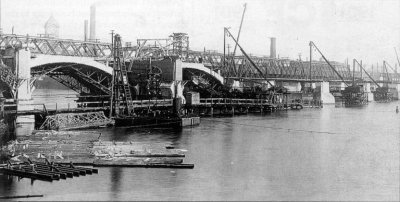
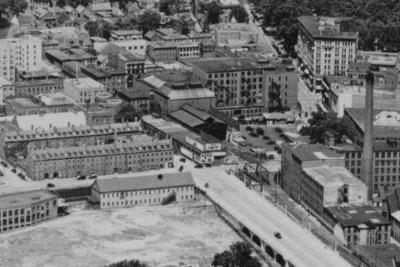
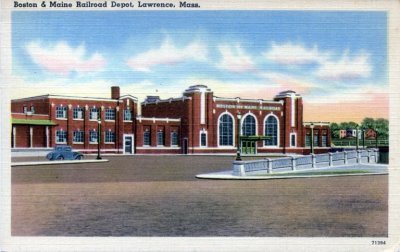
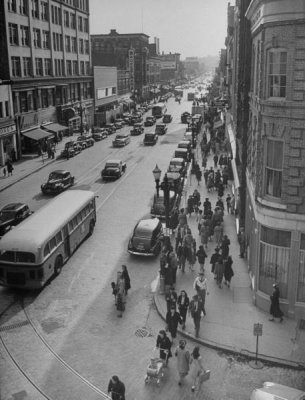
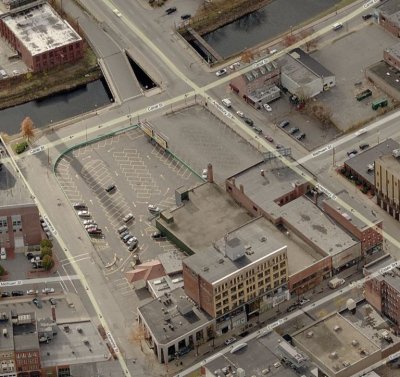
In 1918, after 5 years of construction, the Central bridge over the Merrimack was completed, along side the train bridge. In 1920 the Opera House was renamed the Rialto and run by the Lawrence Rialto Theater Company. In 1921 they boasted in ads of "five big acts of vaudeville" on Sunday and played movies on weekdays. By the 1920s the B&M could no longer afford the luxury of the numerous parallel branch lines it had inherited from its predecessors, among which were two lines between Lowell and Lawrence. The B&M branch was retained, and the Lawrence & Lowell Branch was abandoned. Passenger train service to that depot ended in 1923, about the time that the Rialto became the Winter Garden Auditorium at 330 Essex St. All train service over the original B&L bridge ended by 1926 and the Winter Garden closed in 1931, the same year that the B&M built a new station on the south side of the river and closed the depot at Essex and Broadway near Theater Row also. The Opera House building, considered a hazard, was demolished in the 1940s. The train bridge would be demolished in the 1950s though the foundations for the trestles are still there and visible in the river.
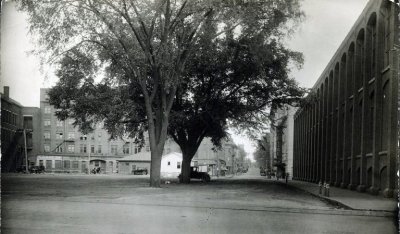
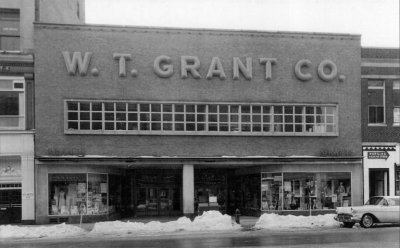
In 1950 the W.T. Grants store had relocated to a new building built on the site of the old Opera House. They would stay there until the late 1960s and then move to the new North Andover mall (currently a Kohl's store) built on the site of another former theater, the Den Rock Drive-In.