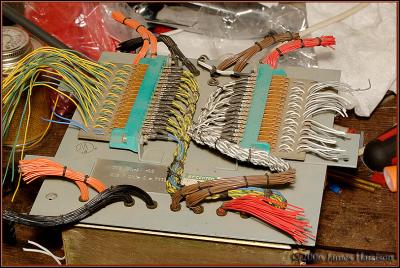
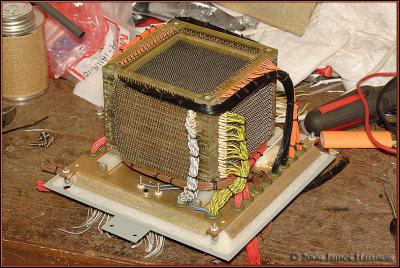
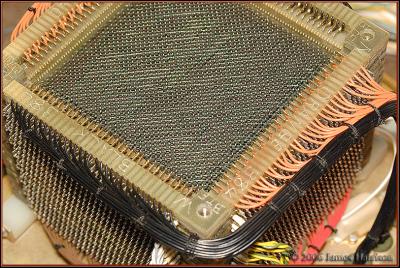
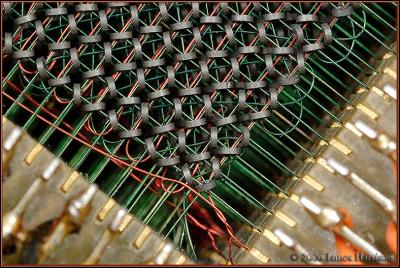
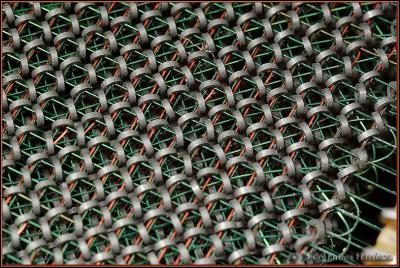
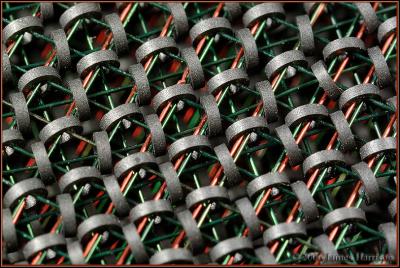
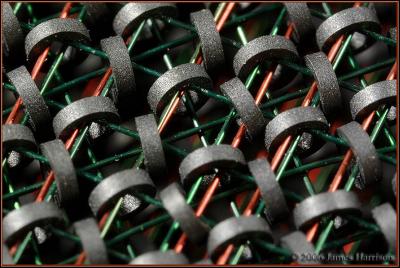
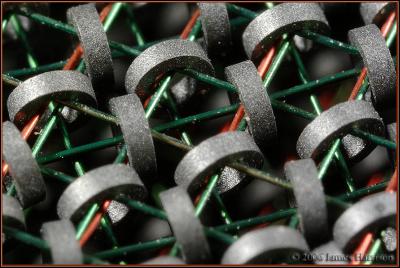
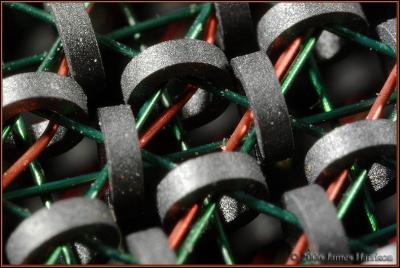
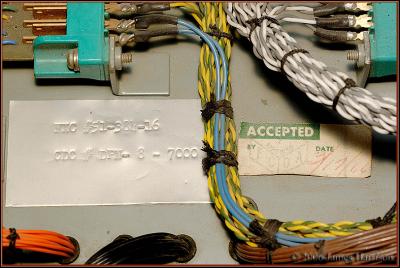
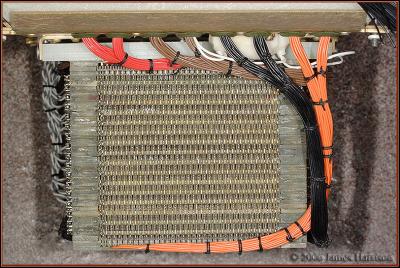
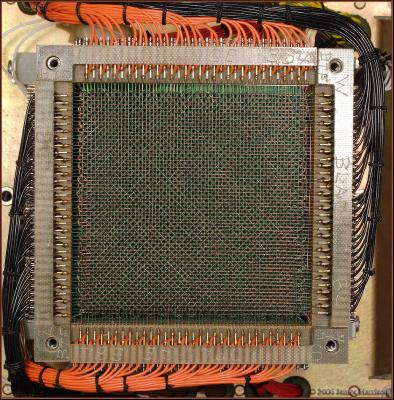
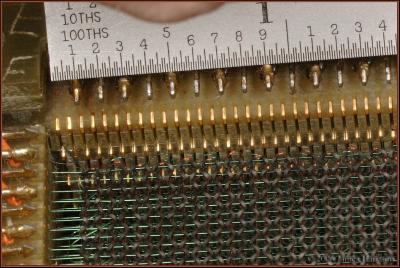
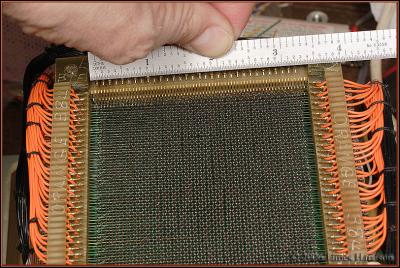
This is a core memory module from a Control Data computer ca. 1966. Years ago, probably in the late '70s or early '80s, the company I worked for was asked to remove this computer from its location in an office within a bank building. The machine needed to be removed to free up valuable space since it was being replaced by the very modern DEC PDP-11.
Instead of filling a room, the new computer fit neatly into one tall 19" rack.
In order that the other bank tenants and customers not be disturbed, we were instructed to cut up the old computer with oxy-acetylene torches if need be so that it could be shoved out a 2nd story window and into the waiting dump truck bound for the landfill.
Needless to say, a bunch of nerds such as us were unable to trash a lot of the prime parts from this beast and they ended up in various peoples' garages, homes, and actually back at our office.
One of the bits I salvaged was this core memory module. I hate to imagine what it cost new.
I was reminded of it a while ago when another photographer posted a photo of some other core memory.
I naturally figured I should take the time to make a few photos of this amazing piece of computing history.
Nice ferrite memory modules, the last time a bit of random access memory could be seen by human eyes. Thanks for sharing
Mark McAtee
21-Sep-2006 02:28
Leave it to James to use a ruler with tenths/hundredths of inches rather than something normal to most of us outside. Last time I saw one of those it was used to set the ring gap on an old Harley (that all the closer HD got. cool ferrite rings though. I think I'll try to find a supplier.
It's interesting to see just how far we have progressed. Yet compaired with biological memory we still have a very long way to go.
Guest
18-May-2006 17:36
I remember seeing similar stuf a few years later (mid-1970's) where the circuit boards were huge and had big components. I used to save a few such items but unfortunately during several moves I was convinced to toss them away. Excellent pictures and thanks for the memories!
Andy K.
Cool. I haven't seen one of these in years. I was once told you could hear the little cores clatter when they were energised. This might be a very early one, because I believe they became quite compact (for core anyway) with development.
John