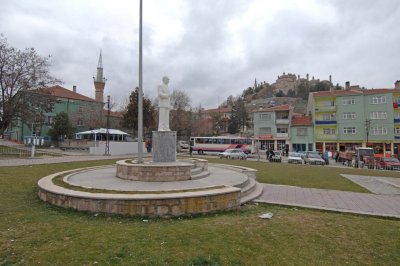
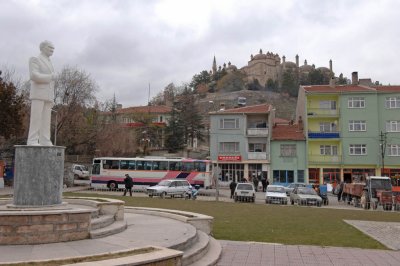
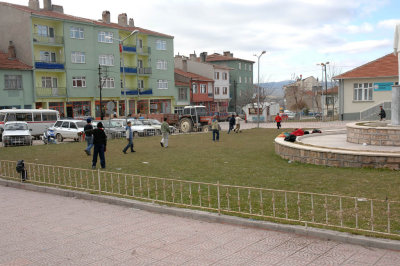
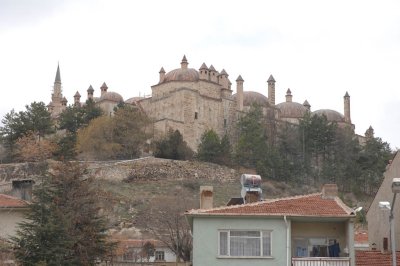
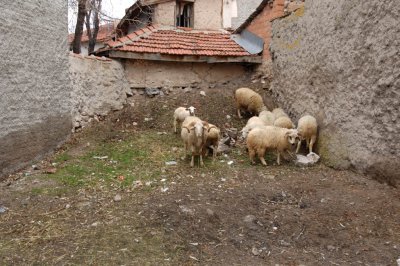
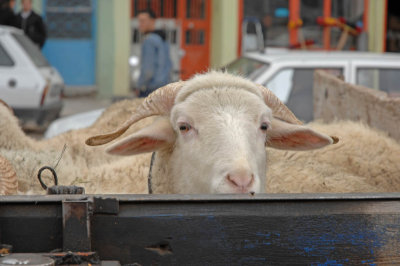
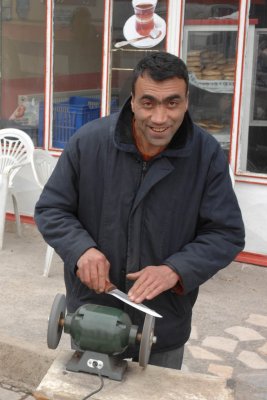
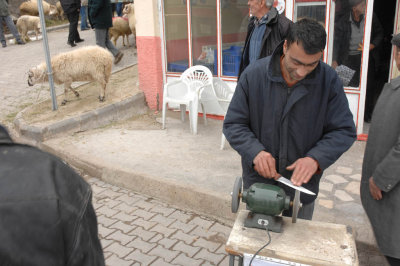
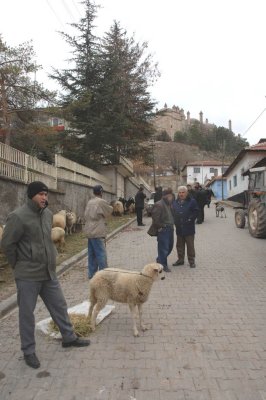
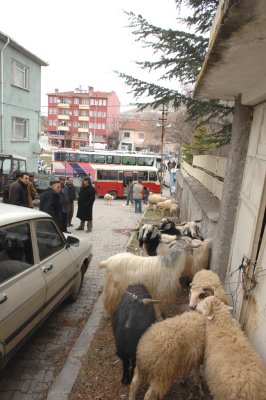
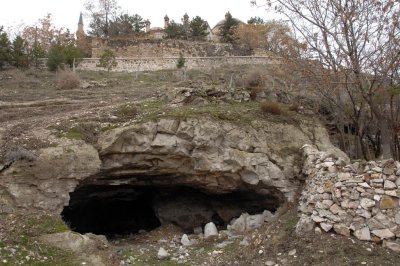
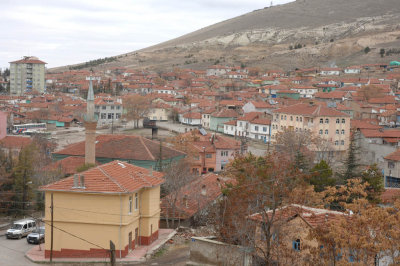
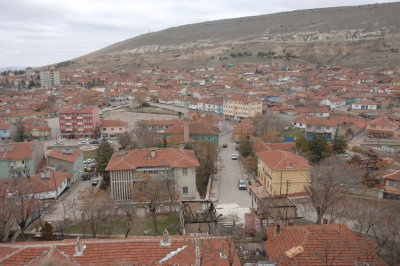
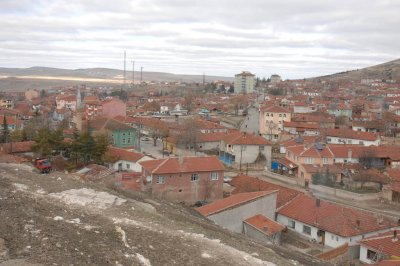
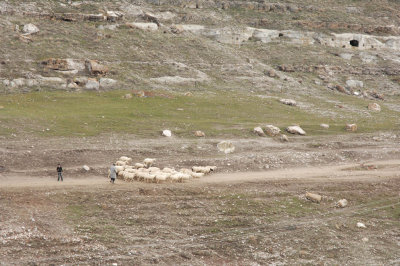
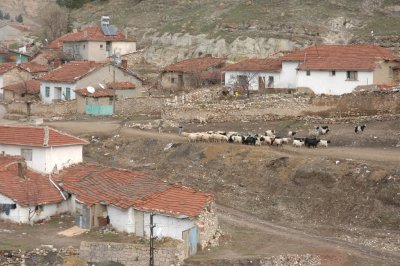
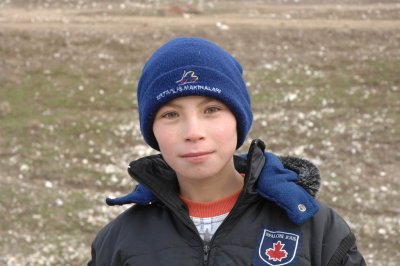
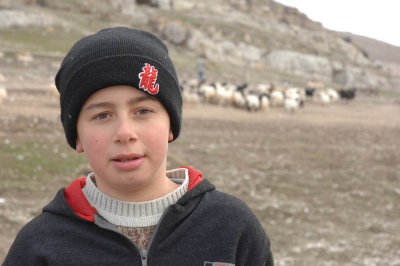
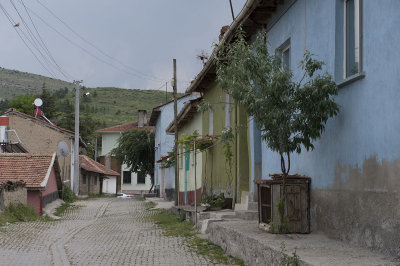
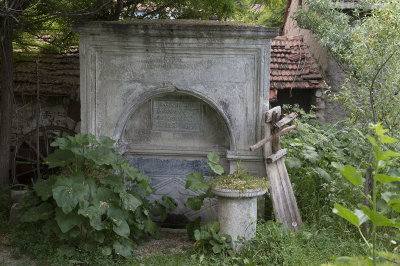
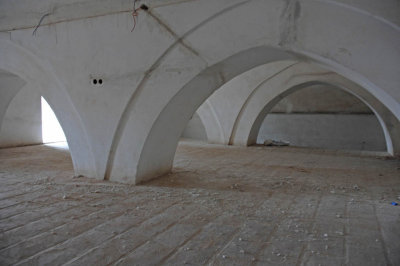
Seyitgazi is a smal town to the Southeast of Eskişehir. You can easily get there by dolmuş. I visited it on the 19th of December, a cold and cloudy day, the last day before the feast of sacrifice. Hence lots of sheep and sharpening of knives. My main reason for going there was the a visit to the dervish monastery that sits on a rock overlooking the town. I did get there, but will probably try and return later: the whole complex was under restoration. So the pictures are full of scaffolding, loose electricity wires and concrete that will look different in a year or so. And some rooms were closed. I liked the surrounding country, to just go for a hike there will be a joy.
The name of the town derives from Şehit Battal Gazi, the leader of an Arab army that in the 8th century tried to capture Afyon. He was slain here, and was buried next to a Byzantine princess who for love followed him into death. The mother of Kayobad, hearing from this romantic story, built a stately türbe (and possibly a medrese). These became the most popular destination for Anatolian muslim pilgrims. Because of this the founder of the Baktaşı order, Haçı Bektaş, started a dervisj monastery here in the 13th century. Under Sultan Selim (1512-1526) türbe and monastery were extensively restored. A 7 meters long cenotaph indicates the importance of Şehit Battal Gazi. The princess lies next to him. A soup kitchen and new mosque were built also.
I will add some descriptions of individual pictures later.
Thank you so much Mr. Osseman, your site provides the best coverage of photos of Turkey. For your information, in case you visit this town once again, in Seyit Gazi, at the Seydibattal türbe, there is supposed to be a room, called 'kesik başlar' - 'heads that are cut off'. These are supposed to be some leading Bektaşi dervish's who revolted againt the Ottoman rule, probably at the time of Yavuz Sultan Selim. My grandmother who lived here during the 1940's, told me that these were buried in that room. You may be interested in exploring this.
Besides, this türbe is in fact an older religious place. There used to be a Byzantine church, I don't know if remains of this can be found. I doubt that even at the pre-christian times this used to be a holy place. This is Phrygia you know :)
Thank you once again for all the magnificent pictures.